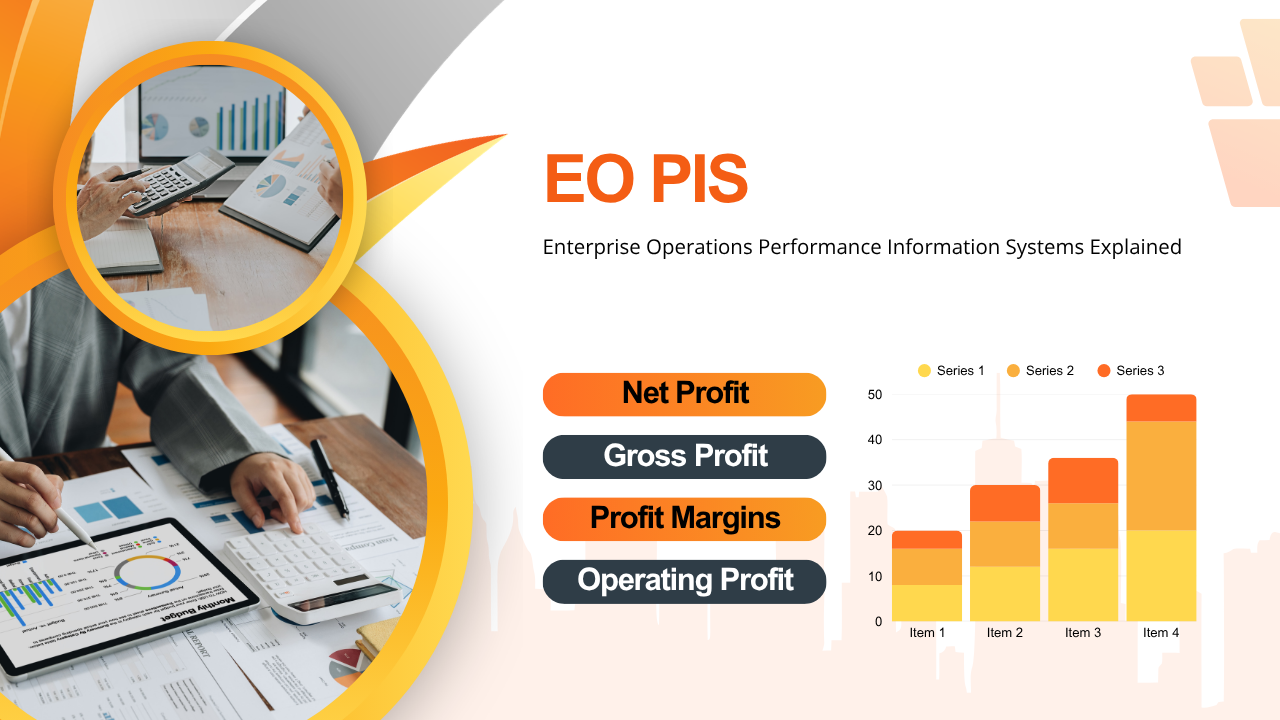
In today’s rapidly evolving business landscape, organizations face unprecedented challenges in managing vast amounts of data while making strategic decisions that directly impact profitability and growth. EO PIS, which stands for Enterprise Operations Performance Information System or Entrepreneurial Objectives and Performance Indicators, represents a transformative approach to how businesses organize, analyze, and act on critical performance data. These sophisticated systems have become indispensable tools for executives, managers, and entrepreneurs who need real-time visibility into their operations and strategic progress.
The term “EO PIS” encompasses multiple related concepts that all share a common goal: enabling organizations to transform raw data into actionable intelligence. Whether you’re a large multinational corporation seeking to consolidate financial information across multiple departments, a mid-sized company establishing strategic objectives, or an entrepreneur building a scalable data infrastructure, EO PIS frameworks and systems provide the technological and methodological foundation necessary for informed decision-making. Understanding what EO PIS represents and how to implement it effectively can significantly enhance operational efficiency and competitive advantage.
What is EO PIS? The Three Primary Interpretations
Enterprise Operations Performance Information System
Definition and Core Function
The Enterprise Operations Performance Information System represents the technological interpretation of EO PIS. This system functions as a modern executive dashboard that consolidates diverse data streams from across an organization into a unified intelligence layer. Rather than requiring executives to navigate multiple separate systems and databases, an EO PIS integrates financial data from accounting systems, operational metrics from production facilities, and sales information from customer relationship management platforms into a single, accessible interface.
The primary value proposition of an EO PIS as a technology platform lies in its ability to eliminate information silos that plague many organizations. Traditional business environments often feature separate departments using incompatible systems that don’t communicate effectively with each other. Finance uses one software platform, operations uses another, and sales uses yet another. This fragmentation creates situations where executives lack complete visibility into business performance and must spend considerable time manually consolidating data for reporting purposes.
Key Components and Features
A robust Enterprise Operations Performance Information System typically includes several essential components. The data integration layer connects to various source systems including enterprise resource planning (ERP) software, customer relationship management (CRM) platforms, financial management systems, and operational monitoring tools. The system automatically extracts, transforms, and loads data from these disparate sources into a centralized data warehouse or data lake.
The analytics engine represents another critical component, processing consolidated data to identify patterns, trends, and anomalies that might indicate business opportunities or emerging problems. This analytical capability transforms raw data into meaningful insights that executives can understand and act upon without requiring specialized data science expertise. The visualization layer presents these insights through intuitive dashboards, charts, and reports that make complex data relationships immediately comprehensible.
Benefits for Executive Decision-Making
Organizations implementing Enterprise Operations Performance Information Systems typically experience dramatically improved decision velocity. Instead of gathering data from multiple sources, which could take hours or days, executives access real-time or near-real-time information through their dashboard. This accelerated access to information enables faster response to market opportunities, customer issues, or competitive threats.
The system also reduces decision-making errors caused by incomplete or outdated information. When executives make decisions based on a comprehensive, integrated view of organizational performance, the likelihood of unintended consequences decreases substantially. For example, a sales decision that might appear profitable based on sales data alone might be revealed as problematic when viewed in context of operational costs and financial constraints visible in an integrated system.
Entrepreneurial Objectives and Performance Indicators Framework
Strategic Business Framework Definition
Establishing Clear Objectives
The Entrepreneurial Objectives and Performance Indicators framework focuses on establishing clear, measurable business objectives and tracking progress through carefully selected key performance indicators. This framework particularly resonates with entrepreneurs and growing businesses that need to maintain strategic focus while scaling operations. Rather than reacting to daily operational challenges, organizations using this framework establish forward-looking objectives that guide all decision-making and resource allocation.
The framework begins with defining entrepreneurial objectives—the specific business outcomes the organization aims to achieve over defined time periods, typically quarterly or annually. These objectives should be ambitious yet achievable, clearly communicated throughout the organization, and aligned with overall business strategy. Examples might include “increase market share by 15% within 18 months,” “reduce operational costs by 20% without compromising quality,” or “expand into three new geographic markets within two years.”
Key Performance Indicators Selection and Measurement
Once objectives are established, organizations identify key performance indicators—measurable metrics that track progress toward objectives. Effective KPI selection requires careful consideration of what actually drives business success rather than simply measuring what’s easy to quantify. A common mistake involves tracking metrics that are convenient to measure rather than metrics that actually correlate with business outcomes.
For example, a customer service organization might track average call handling time as a metric, but this could actually harm customer satisfaction if agents rush customers off calls to minimize duration. Instead, a better KPI might be customer satisfaction scores or customer retention rates, which more directly reflect actual service quality and business impact. The framework emphasizes selecting KPIs that create accountability and drive behavior aligned with strategic objectives.
Implementation and Progress Tracking
Successful implementation of the Entrepreneurial Objectives and Performance Indicators framework requires establishing clear ownership of each objective and its associated KPIs. Team leaders own specific objectives, understand what metrics will demonstrate progress, and regularly track and report performance against targets. This creates clarity throughout the organization about what matters most and how progress is being measured.
Regular review cycles—typically monthly or quarterly—enable organizations to assess progress, identify obstacles, and adjust strategies if objectives prove unrealistic or market conditions change. The framework emphasizes that objectives and KPIs are living documents that guide the organization but remain flexible enough to adapt as circumstances evolve.
Enhanced Online Processing and Information Systems
Security and Scalability Focus
Enterprise-Grade Security Architecture
The Enhanced Online Processing and Information System interpretation of EO PIS emphasizes robust security infrastructure necessary for organizations handling sensitive business data. These systems implement multiple layers of security including encryption of data in transit and at rest, advanced authentication mechanisms, and continuous monitoring for suspicious activities or unauthorized access attempts.
The security architecture must comply with various regulatory requirements depending on the industry. Financial institutions must meet standards established by regulatory bodies, healthcare organizations must comply with HIPAA regulations, and any organization handling personal customer data must adhere to privacy laws such as GDPR or CCPA. An effective EO PIS incorporates these compliance requirements into its core design rather than treating security as an afterthought.
Scalability for Growing Organizations
Scalability represents another critical characteristic of Enhanced Online Processing and Information Systems. These platforms must handle exponential increases in data volume and transaction processing speed as organizations grow. Cloud-based implementations provide particular advantages for scalability, as computing resources can be provisioned dynamically based on demand without requiring significant capital investment in physical infrastructure.
A scalable EO PIS maintains consistent performance even as transaction volumes increase dramatically. An organization might process thousands of transactions daily at one point and millions daily at a later point, yet the system should respond with equivalent speed and reliability regardless of load. This scalability requirement demands sophisticated architectural design including load balancing, distributed databases, and efficient data indexing strategies.
High-Performance Online Processing
Enhanced Online Processing and Information Systems prioritize rapid transaction processing and real-time or near-real-time reporting. Modern businesses cannot tolerate delayed information—a delay of even a few hours in recognizing a customer service issue or a system failure could result in significant business damage. These systems employ sophisticated caching mechanisms, optimized database queries, and distributed processing to minimize latency.
How Organizations Benefit from EO PIS Implementation
Operational Efficiency Improvements
Eliminating Manual Data Consolidation
One of the most immediate benefits organizations experience from implementing EO PIS is elimination of time-consuming manual data consolidation activities. Finance teams no longer spend hours pulling data from various systems, manually entering information into spreadsheets, and reconciling discrepancies. This automation frees skilled personnel to focus on analytical and strategic activities rather than data wrangling.
The elimination of manual processes also reduces errors inherent in manual data handling. When data moves electronically between systems with transformation rules ensuring consistency, the likelihood of transcription errors, incorrect formulas, or version control problems diminishes substantially. Organizations typically achieve significant reductions in reporting errors and data inconsistencies.
Accelerated Month-End and Quarter-End Closes
Many organizations dread month-end and quarter-end closing periods when finance teams work extended hours to close books and prepare financial statements. A well-implemented EO PIS can dramatically reduce the time required for these critical activities. Automated data feeds from operational systems to the general ledger, pre-configured reconciliations, and instant reporting capabilities compress closing timelines from weeks to days or even hours.
This acceleration provides immediate business benefits. Organizations can close their books faster, enabling quicker financial analysis and faster decision-making. It also reduces the overtime and stress associated with close periods, improving employee satisfaction and retention among finance team members.
Enhanced Strategic Decision-Making
Real-Time Visibility into Performance
EO PIS implementations provide executives with real-time visibility into how the organization is performing against strategic objectives. Rather than making decisions based on monthly or quarterly reports that reflect historical performance, executives see current performance and can identify emerging trends immediately. This real-time visibility enables proactive management rather than reactive crisis management.
For example, if a sales organization tracks revenue progress toward annual targets, real-time EO PIS data reveals whether the organization is on pace to achieve targets. If data suggests the organization will fall short, leadership can take corrective action immediately rather than discovering shortfalls after the quarter or year ends when remediation becomes impossible.
Data-Driven Competitive Advantage
Organizations with superior information access relative to competitors gain significant competitive advantages. When data-driven decision-making becomes embedded in organizational culture through EO PIS implementation, organizations make more optimal decisions across all business functions. This compounds over time, creating performance advantages that become increasingly difficult for competitors to overcome.
The combination of integrated data visibility and strategic focus on performance indicators creates a organizational culture where decisions are based on evidence rather than intuition or politics. While intuition and experience remain valuable, they’re informed and validated by data, resulting in better decisions and superior outcomes.
Implementation Challenges and Success Factors
Common Implementation Obstacles
Data Quality and Integration Issues
Organizations often underestimate the complexity of integrating data from disparate source systems. Different systems may define the same metrics differently, use different codes for the same entities, or contain incomplete or inaccurate data. Before implementing a comprehensive EO PIS, organizations typically must invest significant effort in data quality improvement and standardization.
Legacy systems that lack modern data integration capabilities present particular challenges. Organizations that have accumulated various business management systems over decades may struggle to extract data from older systems that weren’t designed for integration. In these cases, data integration specialists may need to build custom interfaces or workarounds to extract necessary information.
Organizational Change Management
EO PIS implementation represents significant organizational change that extends beyond technology implementation. Employees accustomed to working with familiar systems and processes must adapt to new tools and workflows. Some resistance typically emerges, particularly from individuals whose power or status previously derived from controlling information access.
Successful implementation requires strong executive sponsorship, clear communication about why the system is being implemented and how it benefits the organization, and adequate training to ensure employees can effectively use the new system. Organizations that treat EO PIS implementation as purely a technology project without addressing change management typically experience disappointing results.
Success Factors
Executive Commitment and Sponsorship
Organizations with strong executive sponsorship tend to implement EO PIS systems more successfully. When leadership demonstrates genuine commitment through active involvement, resource allocation, and use of the system for decision-making, the organization recognizes the initiative’s importance and allocates appropriate effort and attention.
Clear Objectives and Metrics Definition
Success requires clarity about what the organization is trying to achieve with EO PIS implementation. Rather than implementing the system broadly across all possible metrics, successful organizations identify specific, important business decisions that the system will support and focus initial implementation on those areas. This focused approach enables faster realization of benefits and builds confidence in the system.
Iterative Implementation Approach
Organizations often achieve better results with phased, iterative implementation rather than attempting complete, organization-wide implementation simultaneously. Starting with a pilot group or specific business unit, working through inevitable challenges, refining processes, and then expanding to additional areas typically results in smoother overall implementation and better final outcomes.
FAQs: Frequently Asked Questions About EO PIS
What does EO PIS stand for?
EO PIS can stand for three different concepts depending on context: Enterprise Operations Performance Information System (a technology platform for data integration), Entrepreneurial Objectives and Performance Indicators (a strategic business framework), or Enhanced Online Processing and Information System (emphasizing security and scalability). The specific meaning depends on how the term is being used in your particular business context.
How does EO PIS differ from traditional business intelligence systems?
While traditional business intelligence systems focus on historical analysis and reporting, EO PIS systems emphasize real-time data integration, strategic objective alignment, and actionable insights for decision-making. EO PIS typically integrates operational data directly into strategic planning and decision-making processes, whereas traditional BI systems often function separately from day-to-day operations.
How long does EO PIS implementation typically take?
Implementation timelines vary significantly depending on organizational size, system complexity, and data quality issues. Small organizations with clean data might implement core functionality within 3-6 months, while large enterprises with complex environments might require 12-24 months for complete implementation. Phased approaches typically take longer overall but reduce risk and accelerate time to value.
What is the typical cost of implementing an EO PIS system?
Costs vary dramatically based on organization size, chosen technology platform, and implementation approach. Small organizations might implement solutions for $50,000-$200,000, while enterprise implementations could exceed several million dollars. Cloud-based solutions typically offer lower upfront costs than on-premises implementations but may have higher ongoing subscription costs.
How do I measure ROI from EO PIS implementation?
ROI can be measured through reduced close timelines, labor cost savings from automation, improved decision quality translating to better business outcomes, and faster time-to-insight for strategic opportunities. Many organizations see measurable ROI within 12-18 months of implementation through a combination of these factors.
What skills do employees need to use EO PIS effectively?
Users need basic understanding of their business function, familiarity with the specific EO PIS tool being used, and analytical thinking skills to interpret data and make decisions. Deep technical expertise isn’t required for most users, though technical staff supporting the system need strong database, data integration, and system administration skills.
Can EO PIS work for small businesses?
Yes, EO PIS concepts and frameworks apply to organizations of any size. While sophisticated EO PIS technology platforms are often designed for enterprise-scale organizations, smaller businesses can benefit from simpler implementations that address their specific needs and budget constraints.
Conclusion: The Strategic Value of EO PIS
Enterprise Operations Performance Information Systems represent a fundamental evolution in how modern organizations operate. Whether implemented as a technology platform, a strategic framework, or a processing infrastructure, EO PIS enables organizations to transform raw data into strategic competitive advantage. The integration of financial, operational, and sales data into a unified intelligence system, combined with clear performance objectives and indicators, creates an organizational capability that directly translates to better decisions and superior business outcomes. Organizations investing in EO PIS implementation position themselves to operate more efficiently, respond faster to market opportunities, and maintain competitive advantage in increasingly complex business environments.