Introduction to Çeviri
Understanding Turkish Terminology
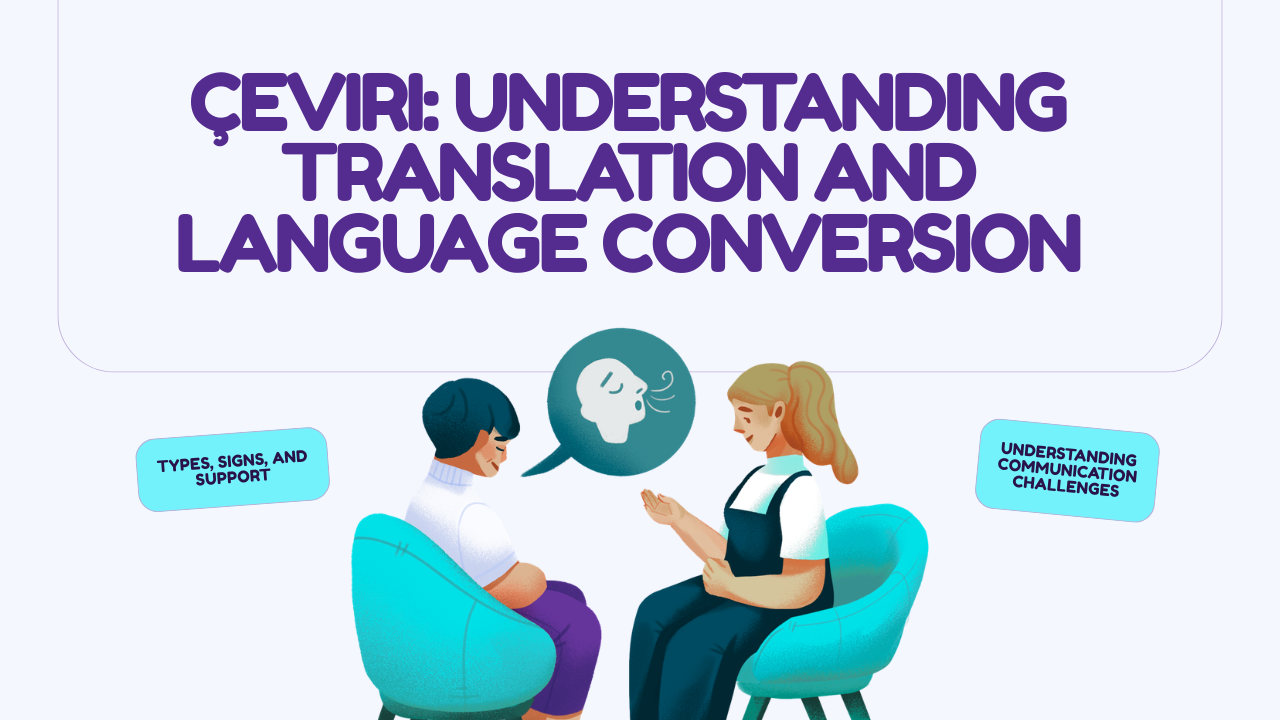
Çeviri, correctly spelled Turkish word meaning “translation” or “rendition,” represents fundamental concept within Turkish language and international communication. The term—often misspelled as “Ceıvır” due to unfamiliarity with Turkish character usage—refers to act of translating content from one language to another while preserving original meaning, tone, and context. Understanding çeviri requires appreciating both the literal definition and the complex cognitive, linguistic, and cultural processes underlying effective translation practice.
Linguistic Bridge and Communication Tool
Çeviri functions as essential linguistic bridge enabling communication across language barriers and facilitating understanding between speakers of different languages. Rather than simply converting words from one language to another, effective çeviri involves sophisticated translation processes balancing literal accuracy with cultural appropriateness, contextual relevance, and tone preservation. The translation process represents both art and science, requiring linguistic expertise combined with cultural knowledge and creative problem-solving.
Digital Age Transformation
In contemporary digital age, çeviri has been revolutionized through translation technology, with tools like Google Çeviri (Google Translate) making translation accessible to billions of users worldwide. The digital transformation—from specialized human translation services to instantly available digital tools—has democratized access to translation while simultaneously raising questions regarding accuracy, nuance, and cultural appropriateness. The evolution reflects how technology has fundamentally altered communication possibilities and accessibility.
Common Terminology Confusion
The frequent misspelling of çeviri as “Ceıvır” reflects challenges non-Turkish speakers encounter with Turkish language character usage. Turkish employs characters unfamiliar to English speakers including ç (c with cedilla), ı (dotless i), ş (s with cedilla), ğ (g with breve), among others. The character differences—while seeming minor—represent crucial linguistic distinctions affecting proper pronunciation and meaning.
The Turkish Language and Character System
Turkish Alphabet and Special Characters
Turkish language employs 29-letter alphabet including several characters unfamiliar to English speakers:
Ç (ç): Soft “c” sound (as in “ch” in English “church”)
Ğ (ğ): Soft “g” sound, often nearly silent between vowels
I (ı): Dotless lowercase i, representing specific vowel sound distinct from dotted “i”
İ (i): Dotted uppercase i, used in uppercase forms of regular “i”
Ş (ş): “Sh” sound (as in English “shoe”)
Ü (ü): Rounded “u” sound (as in French “tu”)
Ö (ö): Rounded “o” sound (as in German “schön”)
The character system—while appearing complex to non-Turkish speakers—enables precise linguistic representation and pronunciation guidance impossible in English alphabet alone.
Proper Turkish Spelling
Çeviri requires proper Turkish spelling with specific character usage:
- Ç (capital C with cedilla) at beginning
- e (standard e)
- v (standard v)
- i (dotless lowercase i)
- r (standard r)
- i (dotless lowercase i again)
The correct spelling ensures proper pronunciation (approximately “chev-eer-ee”) and conveys intended meaning clearly to Turkish speakers.
Spelling Variation and Recognition
The misspelling “Ceıvır” attempts to represent Turkish word using character substitutions:
- Ce instead of Çe (missing cedilla)
- ı (dotless i) correctly used
- v correctly used
- ır correctly used overall
The partial correct spelling with missing cedilla represents common confusion among non-Turkish speakers unfamiliar with character requirements.
Core Definition of Çeviri
Translation as Linguistic Process
Çeviri represents act of translating content from one language to another while maintaining original meaning, tone, and context. The definition encompasses far more than simple word-for-word conversion—it involves sophisticated understanding of both source and target languages, cultural contexts, intended audiences, and subtle linguistic nuances that direct translation cannot capture.
Meaning Preservation
The primary objective of effective çeviri involves preserving original meaning despite different linguistic structures, vocabularies, and grammatical systems. Languages differ fundamentally in how they express ideas, with some concepts easily translatable while others lack direct equivalents. Effective translators must understand source material’s meaning deeply enough to convey equivalent understanding in target language even when direct word equivalents don’t exist.
Tone and Style Maintenance
Beyond literal meaning, çeviri aims to preserve tone and style of original material. A humorous text translated without preserving humor loses essential character. Formal documents require formal translation tone. Poetic language demands translation preserving literary qualities. The tone preservation represents crucial aspect distinguishing professional translation from mechanical word conversion.
Context Preservation
Contextual appropriateness represents essential çeviri dimension often overlooked in basic translation. Understanding context—historical, cultural, situational—enables translators to select appropriate vocabulary and phrasing. Idioms, cultural references, and specialized terminology require contextual understanding beyond simple linguistic knowledge. The context awareness separates quality translation from literal but culturally inappropriate conversion.
Rendition vs. Translation
The English equivalent “rendition” emphasizes çeviri’s interpretive dimension. Rather than serving as mechanical conversion, rendition suggests artistic interpretation while remaining faithful to original. The term acknowledges that translation involves creative decision-making, cultural interpretation, and subjective choices regarding equivalent expressions.
Grammatical Forms and Linguistic Application
Çeviri as Noun
Çeviri functions as noun referring to translation product or activity. Examples of usage include:
“Bu çeviri çok iyi” (This translation is very good)
“Profesyonel çeviri hizmetleri” (Professional translation services)
“Türkçe çeviri” (Turkish translation)
The noun form emphasizes translation as tangible product or service.
Çevir as Verb
Çevir represents verb form meaning “translate” or “turn/flip.” The imperative form “çevir” means “translate!” or “turn!” The verb encompasses:
Action of translating: “Lütfen metni İngilizceden Türkçeye çevir” (Please translate the text from English to Turkish)
Turning or flipping: “Sayfayı çevir” (Turn the page)
Rotational movement: “Arabayı çevir” (Turn the car)
The verb’s multiple meanings reflect how Turkish language efficiently encompasses related concepts through single root word.
Verb Conjugation Examples
Turkish verb conjugation adapts “çevir” across different tenses and contexts:
Present tense: “Çeviriyorum” (I am translating)
Past tense: “Çevirdim” (I translated)
Future tense: “Çevireceğim” (I will translate)
Conditional: “Çevirseydim” (If I translated)
The conjugation patterns reflect Turkish language’s agglutinative structure where verb roots combine with suffixes indicating tense, mood, and subject.
Translation Process and Methodology
Pre-Translation Analysis
Effective çeviri begins with thorough analysis of source material including:
Content Understanding: Deep comprehension of source text’s meaning, purpose, and intended message
Audience Analysis: Understanding target audience’s language level, cultural background, and expectations
Context Evaluation: Identifying historical, cultural, or situational context affecting translation choices
Terminology Research: Identifying specialized vocabulary requiring accurate translation equivalents
Cultural Considerations: Recognizing culturally specific references, idioms, or concepts requiring adaptation
The analysis phase—while invisible in final translation—fundamentally influences translation quality.
Translation Strategy Development
Translators employ various strategies addressing different translation challenges:
Literal Translation: Word-for-word conversion maintaining source language structure
Free Translation: Prioritizing meaning and naturalness over literal structure
Semantic Translation: Balancing literal accuracy with natural expression
Functional Translation: Focusing on communicating intended function rather than exact wording
Transcreation: Creative rewriting conveying original meaning and emotional impact in target language
Localization: Adapting content for specific cultural and linguistic contexts
The strategy selection depends on source material type, target audience, and translation objectives.
Quality Assurance and Review
Professional translation involves multiple review stages:
Self-review: Translator reviewing own work for errors and improvements
Peer review: Colleague translator evaluating translation quality and accuracy
Subject matter expert review: Specialist ensuring technical accuracy and terminology appropriateness
Back-translation: Translating translated text back to source language to verify meaning preservation
Native speaker review: Target language speaker evaluating naturalness and appropriateness
The multiple review stages ensure translation quality and accuracy.
Digital Translation Tools and Technology
Google Çeviri (Google Translate)
Google Çeviri (Google Translate) represents most widely used digital translation tool globally, employing “çevir” as trigger word for Turkish translations. The platform:
Supports 100+ languages: Enables translation between virtually all major world languages
Uses machine learning: Employs neural machine translation technology continuously improving accuracy
Provides instant translation: Delivers translations within seconds of text input
Enables multiple formats: Translates text, documents, websites, and images
Offers pronunciation assistance: Provides audio pronunciation guidance for translations
The tool’s accessibility revolutionized translation availability while raising accuracy and appropriateness questions.
Machine Translation Limitations
Despite technological advances, machine translation systems possess inherent limitations:
Contextual understanding: Difficulty comprehending contextual nuances and implied meanings
Cultural appropriateness: Challenges translating culturally specific content and idioms
Tone preservation: Difficulty maintaining original tone and stylistic qualities
Specialized terminology: Struggles with technical, medical, or specialized vocabulary
Ambiguity resolution: Difficulty resolving multiple meaning possibilities in source text
Nuanced expression: Challenges capturing subtle meanings and emotional content
The limitations underscore that technology, while powerful, hasn’t completely replaced human translators.
Hybrid Translation Approaches
Contemporary translation frequently employs hybrid approaches combining machine and human translation:
Machine-assisted translation: Humans use machine translation as starting point, then refine and improve
Human post-editing: Machine translation followed by professional human editing for accuracy and quality
Computer-aided translation (CAT): Specialized software supporting human translators through terminology management and consistency checking
Crowdsourced translation: Community translation with professional review and refinement
The hybrid approaches attempt capitalizing on technology’s speed and efficiency while incorporating human expertise and judgment.
Types and Applications of Çeviri
Written Text Translation
Written translation encompasses:
Literary translation: Translating novels, poetry, and creative writing while preserving literary qualities
Technical translation: Translating manuals, specifications, and technical documentation
Business translation: Translating contracts, marketing materials, and business documents
Academic translation: Translating scholarly papers, research, and educational materials
Website translation: Translating website content and digital materials
Legal translation: Translating legal documents requiring precise terminology and accuracy
Each category presents distinct challenges and requires specific expertise.
Spoken Language Translation
Interpreting (oral translation) involves:
Consecutive interpreting: Interpreter translates after speaker completes sentences or paragraphs
Simultaneous interpreting: Interpreter translates while speaker is speaking, typically through headsets
Whispered interpreting: Interpreter whispers translation to specific audience members
Community interpreting: Interpreting in healthcare, legal, and social service settings
Conference interpreting: High-level interpreting at international conferences and meetings
Interpreting requires different skills than written translation, demanding real-time processing and quick decision-making.
Specialized Translation Fields
Specific industries employ specialized translation expertise:
Medical translation: Translating medical documents, prescriptions, and healthcare communications
Legal translation: Translating legal documents requiring exact terminology and precise meaning
Financial translation: Translating financial documents and reports with specific terminology
Software translation: Translating software interfaces and documentation (localization)
Patent translation: Translating patent documents requiring technical and legal accuracy
Subtitle translation: Translating film and television content fitting space and time constraints
The specialized fields require domain expertise beyond general translation ability.
Cultural and Linguistic Challenges in Translation
Idioms and Expressions
Idioms and culturally specific expressions present significant translation challenges. Direct translation of idioms frequently produces nonsensical results:
Turkish idiom: “Denize duvarcı ile karşı gelmek” (literally “standing against the sea with a wall”)
Meaning: Attempting something impossible
Direct translation: Would be incomprehensible in English
Appropriate translation: “Tilting at windmills” or “fighting a losing battle”
The cultural specificity of idioms requires cultural knowledge alongside linguistic expertise.
Conceptual Differences
Some concepts lack direct equivalents between languages, requiring creative translation approaches:
Turkish concept: “Merak” (curiosity, concern, wonder—encompasses multiple English concepts)
No single English equivalent: Requires explaining combination of curiosity, care, and longing
Translation challenge: Conveying nuanced meaning without equivalent single-word expression
Solution: Context-dependent translation selecting most appropriate English word for specific usage
The conceptual differences reflect how different languages categorize and conceptualize reality differently.
Grammar and Structure Differences
Fundamental grammatical differences between languages create translation challenges:
Turkish: Subject-Object-Verb (SOV) word order
English: Subject-Verb-Object (SVO) word order
Turkish: Agglutinative structure combining root words with multiple suffixes
English: Primarily isolating structure with separate words conveying grammatical information
Turkish: Extensive use of participles and gerunds
English: Different verbal structures with distinct grammatical forms
The structural differences require significant reformulation rather than simple word substitution.
Register and Formality Levels
Different languages employ different formality conventions requiring careful navigation:
Turkish: Extensive formal/informal verb forms and address conventions
English: More limited formal/informal distinction
Translation challenge: Maintaining appropriate register when target language offers different range of formality options
Solution: Understanding context and intended audience to select appropriate register level
Frequently Asked Questions About Çeviri
What is çeviri?
Çeviri is Turkish word meaning translation or rendition—the act of translating content from one language to another while preserving original meaning, tone, and context.
How is çeviri pronounced?
Çeviri is pronounced approximately “chev-eer-ee,” with emphasis on first syllable and soft “ch” sound at beginning from Turkish character ç.
What’s the difference between çeviri and çevir?
Çeviri is noun form referring to translation as product or activity. Çevir is verb form meaning “translate!” (imperative) or “turn/flip.” Both derive from same root but serve different grammatical functions.
Why is çeviri often misspelled as “Ceıvır”?
The misspelling reflects unfamiliarity with Turkish special characters, particularly ç (c with cedilla) which non-Turkish speakers often render as regular c missing the distinctive cedilla mark.
What does Google Çeviri mean?
Google Çeviri literally means Google Translate—the translation service offered by Google using “çevir” as trigger word for Turkish language translations.
How does effective translation differ from direct word conversion?
Effective çeviri involves preserving meaning, tone, and context rather than simply converting words. Direct conversion often produces awkward or nonsensical results, while effective translation requires understanding original intent and cultural context.
What are the main challenges in translation?
Major translation challenges include idiom translation, conceptual differences between languages, grammatical structure differences, cultural reference translation, and maintaining tone and formality levels across language boundaries.
Can machine translation replace human translators?
While machine translation tools have improved dramatically, they cannot yet fully replace human translators for nuanced, culturally appropriate, or specialized translation. Human expertise remains crucial for quality translations, though hybrid approaches combining technology and human skill increasingly supplement pure human translation.
What qualifications do professional translators need?
Professional translators typically require bilingual or multilingual fluency, specialized training in translation methodology, often university-level education in translation studies, subject matter expertise for specialized translation, and extensive experience building language skills and cultural knowledge.
How does literary translation differ from technical translation?
Literary translation prioritizes preserving artistic qualities, emotional resonance, and creative expression. Technical translation prioritizes accuracy, clarity, and precise terminology. Literary translation permits more creative interpretation while technical translation demands literalness and precision.
What is localization in translation context?
Localization involves adapting translated content for specific geographic, cultural, or linguistic contexts—going beyond simple translation to modify references, measurements, date formats, and cultural appropriateness for target locale.
Why do idioms present translation challenges?
Idioms are culturally specific expressions whose meaning cannot be determined from literal word meanings. Direct translation of idioms produces nonsensical results, requiring translators to identify equivalent expressions in target language conveying same meaning and tone.
How does Turkish language structure affect translation?
Turkish employs Subject-Object-Verb word order (different from English SVO), uses agglutinative grammar combining root words with multiple suffixes, and employs extensive participle and gerund forms. These structural differences require significant English reformulation rather than word-for-word translation.
What is back-translation?
Back-translation involves translating translated text back to source language to verify that meaning has been preserved. If back-translation produces text different from original, translation quality may be compromised, indicating need for revision.
How important is cultural knowledge for translators?
Cultural knowledge is absolutely essential for quality translation. Understanding cultural context, references, values, and communication styles enables translators to select culturally appropriate expressions and avoid offense or misunderstanding resulting from literal translation.
What role does terminology management play in translation?
Terminology management involves maintaining consistent translation of specialized terms throughout document or across multiple documents. Glossaries and translation memory tools help ensure consistency, particularly in technical or business translation where terminology precision is crucial.
How do professional translators maintain quality?
Professional translators maintain quality through multiple review stages including self-review, peer review, subject matter expert review, back-translation, and native speaker review. This multi-stage process ensures accuracy, appropriateness, and quality.
Can translation preserve all aspects of original text?
Perfect translation preserving all aspects of original is impossible due to fundamental language differences. Translators must make choices prioritizing different aspects—some translations prioritize literal accuracy, others prioritize readability, others prioritize cultural appropriateness. The translation choice depends on purpose and audience.
What is the relationship between translation and interpretation?
Translation refers to written language conversion while interpretation refers to oral/spoken language conversion. While both involve language transfer, they employ different skills—interpreters must work in real-time while translators can deliberate and revise.
How has technology changed translation work?
Technology has democratized translation access through tools like Google Translate, enabled translation memory and CAT tools supporting human translators, but also raised questions about accuracy and quality. Technology increasingly supplements rather than replaces human translation expertise.
What languages are most commonly translated?
English, Spanish, Mandarin Chinese, French, German, and Arabic represent most commonly translated languages due to large speaker populations and international significance. Turkish translation services also represent substantial market due to Turkey’s geographic and economic importance.
Professional Translation Services and Industry
Translation Service Categories
Professional translation services encompass multiple categories:
Freelance translation: Independent translators serving individual clients and projects
Translation agencies: Companies coordinating multiple translators and quality assurance processes for larger projects
In-house translation departments: Organizations maintaining internal translation capabilities
Hybrid services: Combining machine translation with human post-editing and professional review
Specialized translation firms: Focusing on specific industries like legal, medical, or technical translation
Each service type addresses different client needs and project requirements.
Quality Standards and Certification
Professional translation industry maintains quality standards including:
ISO 17100: International standard for translation service provision
Professional certifications: From organizations like American Translators Association or similar bodies in other countries
Translator credentials: Advanced education in translation studies or specific subject matter expertise
Portfolio demonstration: Showcasing previous work quality and client satisfaction
Continuing education: Maintaining current knowledge of language evolution and industry standards
The standards help ensure translation quality and professionalism.
Cost Factors in Professional Translation
Translation costs depend on multiple factors:
Language pair: Some language combinations command higher rates than others
Specialization: Specialized translation (medical, legal) costs more than general translation
Turnaround time: Rushed translation typically costs more than standard timeline translation
Volume: Larger projects may receive volume discounts
Translator experience: Experienced, specialized translators command higher rates
Quality level: Higher quality assurance requirements increase costs
Understanding cost factors helps clients budget appropriately for translation needs.
Modern Applications and Future of Translation
Digital Communication and Global Business
Çeviri and translation have become essential for:
International business: Enabling commerce and communication across language barriers
Digital communication: Supporting global social media, email, and messaging
Content distribution: Enabling entertainment, news, and educational content global distribution
Scientific collaboration: Enabling researchers worldwide to share findings and collaborate
Cultural exchange: Facilitating understanding and appreciation of different cultures
The digital age has made translation indispensable for global connectivity.
Emerging Translation Technologies
Advancing technologies continue transforming translation:
Neural machine translation: Deep learning approaches improving machine translation quality
Real-time interpretation: Technology enabling instantaneous spoken language translation
Augmented reality translation: Visual overlays providing real-time translation of physical text
AI-powered translation: Artificial intelligence systems learning and improving from usage patterns
Voice translation: Technology translating speech in real-time across languages
The technological advances promise continued improvement in translation speed and quality.
Human-Technology Collaboration
Future translation likely involves increasingly sophisticated collaboration between human expertise and technological capability:
AI handling routine translation: Technology managing straightforward, high-volume translation
Humans handling nuanced translation: Professionals managing culturally sensitive, specialized, or creative translation
Hybrid quality assurance: Technology flagging potential issues with human verification
Continuous learning systems: AI learning from human corrections and improvements
Specialized AI models: Purpose-built AI systems for specific domains (medical, legal, technical)
The collaboration leverages technology’s efficiency while maintaining human judgment and cultural understanding.
Conclusion
Çeviri, the Turkish word for translation or rendition, represents fundamental linguistic process enabling communication across language barriers in increasingly global world. The term—frequently misspelled as “Ceıvır” by those unfamiliar with Turkish character usage—encompasses far more than simple word conversion. Effective çeviri involves sophisticated translation processes preserving original meaning, tone, context, and cultural appropriateness while navigating fundamental language structure, grammar, and conceptual differences.
The evolution from purely human translation to hybrid approaches combining machine translation with human expertise reflects technological transformation of translation industry while underscoring that human judgment, cultural knowledge, and linguistic expertise remain essential for quality translation. Digital tools like Google Çeviri have democratized translation access while simultaneously raising questions regarding accuracy, nuance, and appropriateness for specialized or culturally sensitive content.
Understanding çeviri requires appreciating translation’s complexity, recognizing challenges inherent in converting content between fundamentally different languages and cultural contexts, and acknowledging the sophisticated expertise required for professional translation services. Whether through human translators, machine translation tools, or hybrid approaches, çeviri remains essential infrastructure enabling global communication, international business, scientific collaboration, and cultural exchange in digital age.
The future of translation likely involves continued technological advancement alongside sustained importance of human expertise, creating sophisticated collaborative models maximizing both technological efficiency and human judgment. As global communication becomes increasingly essential and cross-cultural understanding increasingly valuable, çeviri and translation services will continue evolving in importance and capability, enabling humans worldwide to communicate, collaborate, and understand one another across linguistic and cultural boundaries that historically separated communities.