Introduction
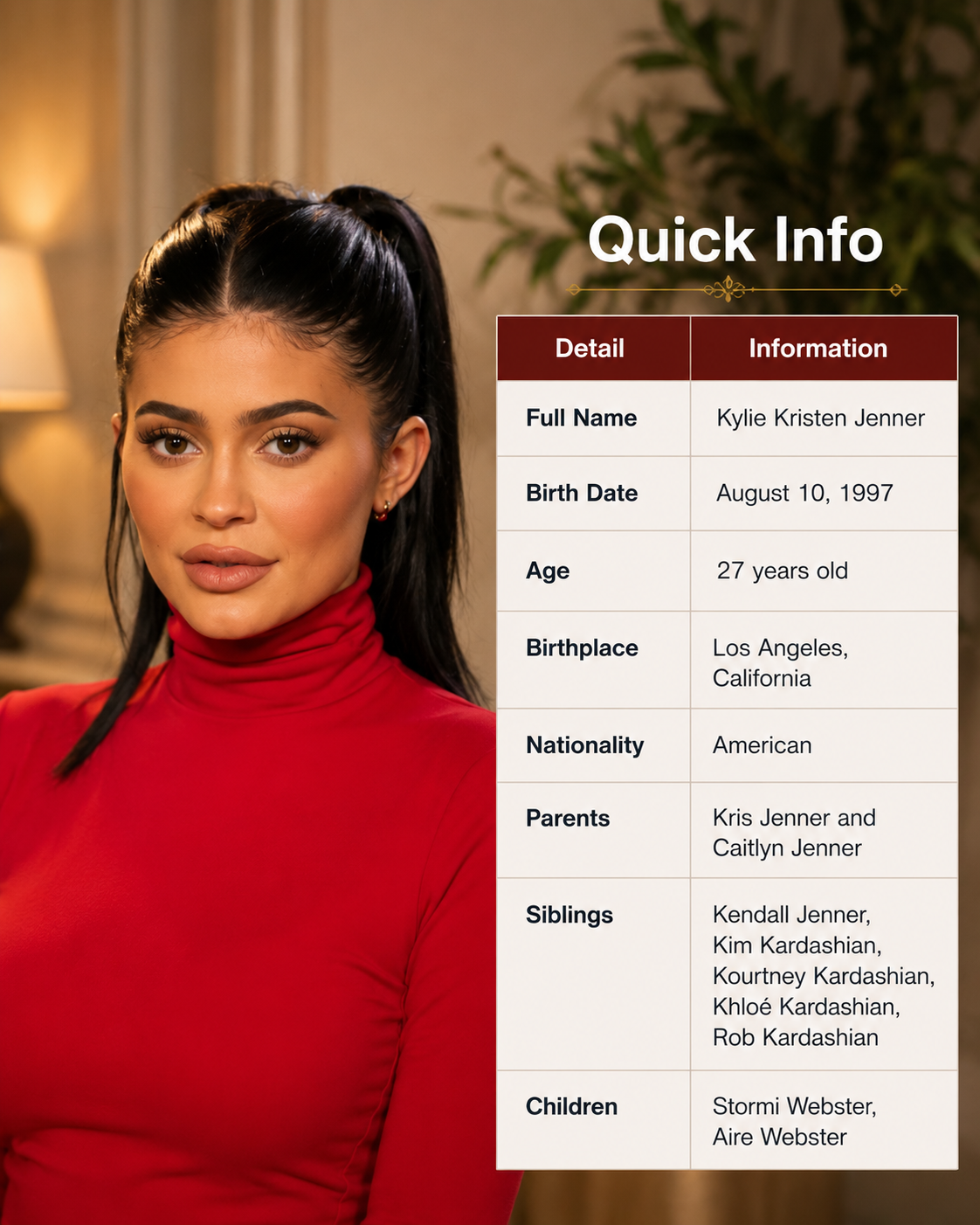
Kylie Jenner represents a fascinating case study in modern celebrity—a figure whose rise to prominence wasn’t built on traditional entertainment credentials, but rather through reality television exposure, social media savvy, and shrewd business acumen. Born on August 10, 1997, she entered the world as part of one of America’s most famous and influential families, yet she has carved out a distinct identity as a businesswoman and cultural influencer. Unlike many celebrities who leverage existing fame to launch business ventures, Kylie Jenner transformed her reality television presence and social media following into a multi-billion-dollar empire that fundamentally changed how beauty brands operate in the digital age.
Her journey from a 10-year-old reality television debutante to a young billionaire entrepreneur encompasses themes of privilege, strategic navigation of family dynamics, digital innovation, and the commercialization of personal brand. By the age of 27, she has already accumulated more business accomplishments than most entrepreneurs achieve in lifetimes, while simultaneously maintaining a massive global social media presence that influences millions of consumers daily. This article explores the multifaceted dimensions of Kylie Jenner’s career, her entrepreneurial ventures, her cultural impact, and the complexities surrounding her path to wealth and influence.
The Foundation: Growing Up in the Kardashian-Jenner Dynasty
The Kardashian-Jenner Family Ecosystem
To understand Kylie Jenner’s trajectory, one must first comprehend the unique environment into which she was born. The Kardashian-Jenner family isn’t merely a group of related individuals; it’s a carefully constructed media empire that has dominated popular culture for nearly two decades. Her mother, Kris Jenner, transformed from a supportive figure in her ex-husband Robert Kardashian’s legal career to becoming one of entertainment’s most powerful managers and producers—a woman who built an empire by recognizing the commercial potential of her children’s image and personalities.
Kylie’s father, Caitlyn Jenner, brought Olympic athlete credibility and international recognition to the family before her own transformation and transition. This combination of parents—one deeply connected to entertainment industry mechanics and the other representing athletic achievement and celebrity—created an environment where Kylie was naturally exposed to business development, media production, and the strategic leverage of personal brand from an early age.
The Older Siblings’ Path
Kylie’s older siblings had already navigated the complexities of Kardashian-Jenner fame by the time she became conscious of her family’s media prominence. Her half-sisters—Kim, Kourtney, and Khloé Kardashian, as well as her brother Rob—had already been integral to the family’s television narrative. Her full sibling, Kendall Jenner, emerged as a supermodel of international significance, establishing herself in the high-fashion world and proving that Kardashian-Jenner family members could achieve success outside reality television.
This sibling dynamic created both opportunities and pressures for Kylie. She had visible examples of how to leverage family fame into individual success, but she also occupied a unique position as the youngest—expected to follow established patterns while finding her own distinctive voice within the family brand.
The Reality Television Beginning
Keeping Up with the Kardashians (2007): The Launch
Kylie Jenner’s introduction to global audiences came at an unusually young age. When Keeping Up with the Kardashians debuted on E! in 2007, she was just 10 years old, making her one of the youngest cast members in a reality television franchise that would eventually become culturally dominant. The show presented an unfiltered look at wealthy Los Angeles life, family dynamics, fashion obsessions, and the various business ventures and romantic entanglements of the Kardashian and Jenner families.
Being raised on camera created a unique dynamic for Kylie and her siblings. Unlike traditional celebrity children who might avoid the spotlight or be protected from media scrutiny, the Kardashian-Jenner offspring grew up as documented personalities. Viewers watched them age, develop personalities, navigate adolescence, and eventually transition into adulthood—all while cameras captured their experiences for mass consumption.
The Youngest Cast Member Advantage
Kylie’s youth during the show’s early seasons actually provided certain advantages. As the cute, youngest family member, she garnered significant viewer affection and protection. Audiences invest emotionally in watching children grow up on screen, and Kylie’s presence provided a narrative hook that extended beyond adult drama. As she matured from a 10-year-old to a teenager and then young adult, viewers experienced a connection to her development that proved invaluable for her eventual transition into independent business ventures.
The consistent television presence from 2007 onward meant that by the time Kylie reached her late teens, she had already accumulated years of celebrity experience, media training, and public recognition that most entrepreneurs would spend decades cultivating. She understood how to present herself on camera, manage public perception, and navigate the complex relationship between privacy and publicity that defines modern celebrity.
The Ongoing Reality Television Presence
Throughout the 2010s, Kylie remained a central figure in Keeping Up with the Kardashians as the show evolved and adapted to changing television landscapes. She participated in the family’s various story arcs—romantic relationships, business developments, family conflicts, and personal growth narratives. Each season provided opportunities for her to develop her public persona, demonstrate business ambitions, and maintain the cultural relevance that would prove essential for her entrepreneurial ventures.
The Life of Kylie Era: Building an Independent Identity
Launching a Solo Project (2017)
In 2017, recognizing the value of her individual brand, Kylie Jenner headlined her own spin-off series, Life of Kylie. This project represented an important transition: moving from ensemble cast member to lead subject of her own narrative. The series allowed her to present her life on her own terms, focusing on her personal interests, entrepreneurial development, and relationships without the filter of family drama that characterized the main show.
Life of Kylie demonstrated that her appeal extended beyond her role within the family dynamic. Audiences were interested in her specifically—her choices, her business development, her personality—not merely as the youngest Kardashian-Jenner but as an individual with her own distinctive identity. The show provided a platform to introduce her business initiatives to mass audiences and frame her as an entrepreneur rather than merely a television personality.
The Evolution of Her Television Presence
While Life of Kylie lasted only one season, it served its strategic purpose. It established Kylie as someone worthy of a standalone television vehicle and demonstrated that the youngest Jenner had transcended her role as supporting cast member. Following the spin-off, she remained a central figure in the family’s television presence while pivoting primary focus toward her business ventures and social media empire.
The Kylie Cosmetics Revolution
The Origin Story: Kylie Lip Kits (2015)
The moment that would fundamentally alter Kylie Jenner’s trajectory and the beauty industry itself arrived in 2015 with the launch of Kylie Lip Kits. This wasn’t an accident or a casual venture; it represented a calculated, sophisticated understanding of market opportunity and digital commerce. Kylie had observed the beauty industry, recognized opportunities for direct-to-consumer sales through social media, and positioned herself to capitalize on her massive Instagram following.
The initial product was deceptively simple: high-quality lip kits combining lip liner and liquid lipstick in limited-edition shades. However, the marketing strategy was revolutionary. Rather than relying on traditional beauty industry distribution channels or celebrity endorsement deals with established brands, Kylie utilized her Instagram platform to market directly to her followers. She announced products through her social media, drove traffic directly to her website, and created artificial scarcity through limited-edition releases and exclusive shade names that referenced personal elements of her life and relationships.
This direct-to-consumer approach proved phenomenally successful. The initial launch sold out within minutes, generating millions of dollars in revenue and demonstrating that her social media following could be converted directly into consumer purchases. Beauty industry observers quickly recognized that Kylie had discovered a revolutionary business model—one that bypassed traditional retail distribution, eliminated middlemen, and created unprecedented profit margins.
Kylie Lip Kits Becomes Kylie Cosmetics
The success of the initial Kylie Lip Kits launch was so substantial that Kylie rapidly expanded the product line. What began as lip kits evolved into a comprehensive beauty brand offering eyeshadow palettes, bronzers, highlighters, foundations, setting sprays, and an extensive array of cosmetic products. The brand maintained the signature direct-to-consumer strategy while scaling operations to meet global demand.
The expansion was managed with impressive business sophistication. Kylie didn’t simply launch products randomly; she strategically timed releases, coordinated with social media announcements, and maintained the scarcity marketing strategy that had proven so effective. Each product launch became a media event, with beauty influencers, celebrities, and devoted followers carefully analyzing new releases and sharing their reactions across social platforms.
The 2019 Coty Acquisition: Strategic Partnership
By 2019, Kylie Cosmetics had grown into a substantial independent enterprise generating hundreds of millions in annual revenue. However, rather than continuing as a private, family-owned operation, Kylie made a sophisticated business decision. She sold a 51% majority stake to Coty Inc., a multinational beauty conglomerate, for $600 million. This transaction valued the company at approximately $1.2 billion.
This deal was strategically brilliant for several reasons. First, it provided Kylie with $600 million in immediate capital while allowing her to maintain significant ownership and creative control through her remaining 49% stake. Second, it granted her access to Coty’s extensive global distribution infrastructure, allowing Kylie Cosmetics to expand into physical retail environments—Sephora, Ulta Beauty, and department stores worldwide—while maintaining her direct-to-consumer presence. Third, it created tax and corporate structure benefits that enhanced her overall financial position.
The Coty partnership represented a maturation of Kylie’s business approach. Rather than remaining purely digital or attempting to build complete distribution infrastructure independently, she recognized the value of partnership while maintaining strategic control. This decision proved prescient, as the global physical retail presence significantly expanded Kylie Cosmetics’ revenue potential and solidified its position as a major player in the multi-billion-dollar beauty industry.
Brand Extension and Diversification
Kylie Skin: Beauty Beyond Cosmetics
Recognizing the success of Kylie Cosmetics, Kylie expanded her entrepreneurial portfolio into skincare with the launch of Kylie Skin. This expansion made strategic sense—beauty consumers often seek comprehensive skincare routines complementary to their makeup products, and Kylie’s brand loyalty was sufficiently strong to extend into adjacent categories.
Kylie Skin launched with a carefully curated product line including cleansers, serums, moisturizers, and specialized treatments. The brand maintained the aesthetic and marketing approach that had proven successful with Kylie Cosmetics, combining social media promotion with direct-to-consumer sales while gradually expanding into physical retail. The skincare market is exceptionally competitive, with established luxury brands and medical-grade lines commanding significant market share, yet Kylie Skin successfully penetrated the market by leveraging her personal brand and devoted following.
Kylie Baby: The Parenting Segment
Following the birth of her daughter Stormi in 2018, Kylie entered the baby care market with Kylie Baby. This expansion represented a strategic shift toward addressing her evolving personal circumstances while capitalizing on her influence with younger consumers and new parents. Baby care products—including body washes, moisturizers, and specialty treatments—allowed her to maintain relevance with audiences experiencing similar life stages.
The baby care market presented different competitive dynamics than cosmetics or skincare, with consumers prioritizing safety, hypoallergenic formulations, and dermatological credibility. Kylie Skin’s baby line positioned itself as luxurious, safe, and designed by someone with personal experience using these products with her own children. This authenticity narrative—a young mother creating products she personally trusted for her children—proved compelling to the target demographic.
Khy: The Fashion Venture
Beyond beauty and skincare, Kylie leveraged her fashion influence through her independent clothing line, Khy. This venture allowed her to express her personal style preferences and design aesthetic while capitalizing on her status as a fashion influencer. The line combined contemporary street wear with luxury elements, appealing to consumers who appreciated Kylie’s personal fashion sensibility.
Fashion represents a particularly competitive arena, with established luxury houses, contemporary brands, and digital-native fashion companies all competing for consumer attention and dollars. However, Kylie’s advantages—massive social media following, personal fashion credibility developed through years of paparazzi coverage and red carpet appearances, and existing customer base from her beauty ventures—provided significant competitive advantages.
The Billionaire Debate and Financial Status
Forbes’ 2019 Billionaire Declaration
In March 2019, Forbes magazine named Kylie Jenner the world’s youngest “self-made” billionaire, estimating her net worth at $1 billion. The declaration generated unprecedented media coverage and cemented her status as one of the wealthiest young entrepreneurs globally. At just 21 years old, she had accumulated a net worth exceeding that of most Americans would accumulate across multiple lifetimes.
The billionaire declaration was particularly significant because of the “self-made” designation. Unlike inherited wealth or money accumulated through family business operations, “self-made” wealth typically refers to fortunes built through individual entrepreneurial effort. The Forbes assessment suggested that while Kylie certainly benefited from family advantages and existing platform, she had personally created the vast majority of her wealth through Kylie Cosmetics and related ventures.
The Revision: Reconsidering the Numbers (2020)
However, Forbes later revised its assessment in May 2020, downgrading Kylie’s status and removing her from the billionaire list. The revision came after the publication re-examined company documents and questioned some of the valuations used to calculate her net worth. The magazine suggested that Kylie’s representatives had provided inflated revenue figures and that actual net worth likely ranged between $700 million and $900 million rather than $1 billion.
The revision generated significant controversy and discussion about wealth measurement methodologies, the reliability of self-reported company valuations, and the distinction between revenue and profit. Kylie’s camp disputed the revision, suggesting that Forbes had been too aggressive in downgrading her status and that the actual figures aligned more closely with their original estimates.
The Ongoing Wealth Discussion
Regardless of whether Kylie’s net worth technically exceeds or falls short of $1 billion, the fundamental reality remains that she has accumulated extraordinary wealth—among the highest for anyone her age globally. Whether her precise net worth is $700 million, $800 million, or $1 billion represents academic distinction; the more significant point is that she has built an empire generating hundreds of millions in annual revenue across multiple product categories and platforms.
The billionaire debate itself proved valuable from a branding perspective. The Forbes designation, even when revised, established her as among the wealthiest young entrepreneurs in the world. The subsequent revision and controversy kept her in media conversation and paradoxically reinforced her status as a self-made businesswoman—someone whose wealth had been scrutinized, analyzed, and disputed, but ultimately confirmed as substantial and self-generated.
Social Media Dominance and Digital Influence
Instagram Supremacy
Kylie Jenner’s social media following represents one of her most valuable assets. As one of the most followed individuals globally on Instagram, she commands an audience exceeding 400 million followers—a reach that most governments and corporations cannot achieve. This digital presence translates directly into commercial power: a single Instagram post announcing a new product launch can generate millions in sales within hours.
The scale of her Instagram following creates what economists call “network effects”—the value of her platform increases exponentially with each additional follower, as brands and consumers recognize the strategic importance of accessing her audience. Her Instagram posts generate millions of likes and hundreds of thousands of comments, indicating not merely passive following but active, engaged audiences.
Monetization of Influence
While Kylie’s primary wealth derives from her beauty and fashion ventures, her social media presence represents a distinct asset with independent commercial value. Brands pay substantial fees for Instagram sponsorships or partnerships. A single sponsored post from Kylie Jenner can cost six or seven figures, depending on the brand, product category, and specific engagement metrics.
However, Kylie has been particularly strategic about sponsorship selection, maintaining relatively careful curation of which brands and products she promotes. This selectivity actually enhances her influence—by declining lucrative sponsorships that don’t align with her aesthetic or brand values, she maintains credibility with her audience and prevents market saturation of sponsored content.
Trend-Setting Capability
Beyond direct product sales or sponsorship revenue, Kylie’s social media presence gives her remarkable trend-setting capability. When she wears a particular fashion item, posts a specific makeup look, or endorses a certain aesthetic, millions of followers attempt to replicate her style. Fashion retailers and beauty brands obsessively track which products Kylie features, recognizing that her implicit endorsement can dramatically increase consumer demand.
This trend-setting power extends beyond products she actually promotes. Beauty tutorials replicating Kylie’s makeup looks, fashion guides showing how to style outfits similar to hers, and beauty tutorials using her signature product combinations all generate massive engagement and consumer interest. In this way, even when she’s not explicitly promoting anything, her existence and personal choices drive consumer behavior across multiple industries.
Family Dynamics and Business Relationships
The Role of Kendall Jenner
Kylie’s full sibling, Kendall Jenner, took a different entrepreneurial path, establishing herself as an internationally recognized supermodel rather than focusing on digital business ventures. While Kendall commands substantial wealth through modeling, endorsements, and select business ventures, Kylie’s accumulated net worth exceeds her sister’s—a fact that would have been virtually impossible to predict during Kendall’s peak modeling years.
This dynamic between the sisters illustrates divergent approaches to leveraging family fame. Kendall pursued traditional entertainment industry pathways—high fashion modeling, prestigious brand partnerships, and selective business ventures aligned with her fashion credibility. Kylie, conversely, recognized early that digital direct-to-consumer models offered unprecedented commercial potential and oriented her career entirely around this emerging landscape.
The Kardashian Sisters’ Business Ventures
Kylie’s older sisters—Kim, Kourtney, and Khloé—have also built substantial business empires, though with different focuses. Kim Kardashian launched KKW Beauty, leveraging her massive personal brand to build a luxury cosmetics line. Kourtney developed lifestyle and wellness-focused ventures. Khloé explored activewear and fitness-related businesses. The family dynamic involves both collaboration and competition, with siblings supporting each other’s ventures while simultaneously pursuing individual business interests that occasionally overlap or compete.
This competitive family environment actually benefited Kylie. Rather than operating in isolation, she was constantly exposed to her siblings’ business strategies, partnership decisions, and entrepreneurial innovations. She observed what worked, what failed, and how to navigate the complex relationship between personal brand, product quality, and consumer loyalty.
Kris Jenner’s Management Role
Kylie’s mother, Kris Jenner, continues to play a significant management and advisory role in her children’s careers and business ventures. While Kylie has increasingly taken direct control of her companies and strategic decisions, Kris’s decades of experience navigating entertainment, media, and business relationships provide valuable guidance and connections. The relationship between Kylie and her mother exemplifies how successful family businesses can function—with respect for individual decision-making while maintaining strategic partnership and support.
Personal Life and Family Considerations
Stormi and Aire Webster: Motherhood and Branding
Kylie’s personal life intersected dramatically with her business ventures through her relationships and children. She shares two children—Stormi Webster (born 2018) and Aire Webster (born 2022)—with rapper Travis Scott. Her journey toward motherhood coincided with the explosive growth of her business empire, creating interesting dynamics between personal life experiences and business development.
The birth of Stormi directly influenced her business decisions, inspiring the launch of Kylie Baby and influencing her social media content. Kylie strategically navigated the balance between monetizing her role as a mother and protecting her children’s privacy—a notoriously difficult balance in the modern celebrity landscape. She shares significant amounts of content featuring her children, but maintains certain boundaries regarding their direct commercial exploitation.
The Travis Scott Relationship Narrative
Kylie’s romantic relationship with rapper Travis Scott shaped both her personal life narrative and her public image. The relationship generated substantial media attention, public speculation about commitment status, and countless paparazzi photographs. Her fashion choices, social media activity, and public appearances were constantly analyzed for relationship status implications.
The relationship’s trajectory—periods of apparent domestic bliss, speculation about breakups, reconciliation, the births of their two children—provided ongoing narrative material for entertainment media and tabloids. This personal relationship narrative, while sometimes intrusive and problematic, simultaneously kept Kylie prominently in media conversation and reinforced her status as a major celebrity figure whose personal choices commanded public attention.
Balancing Motherhood and Entrepreneurship
Kylie’s journey illustrates the contemporary challenge of balancing high-level entrepreneurship with motherhood. Unlike past generations of businesswomen who often delayed or foregone motherhood to pursue careers, Kylie built a multi-billion-dollar empire while simultaneously becoming a young mother. She demonstrated that these aspects of life need not be entirely separate, though she certainly faced scrutiny and judgment regarding her decisions and priorities.
Her willingness to incorporate motherhood into her business narrative—through Kylie Baby, through featuring her children on social media, through discussing her parenting choices publicly—made her relatable to audiences experiencing similar dual roles, while simultaneously providing commercial opportunities related to her personal life experiences.
Cultural Impact and Influence
Democratization of Luxury Beauty
One of Kylie Jenner’s most significant cultural impacts has been the democratization of luxury beauty through direct-to-consumer models. Before Kylie Cosmetics, cosmetics distribution primarily operated through traditional retail channels—department stores, drugstore chains, specialty retailers. Established luxury brands maintained control through exclusive distribution and premium retail locations.
Kylie’s direct-to-consumer approach via Instagram disrupted this established model, demonstrating that consumers would purchase expensive cosmetics directly through digital channels without the traditional retail intermediaries. This innovation forced the entire beauty industry to reconsider distribution strategies and direct consumer relationships, accelerating the shift toward digital commerce that had already been underway.
The Influencer Business Model
Kylie’s business ventures epitomized what would become known as the “influencer economy”—the idea that individuals with large social media followings could leverage that audience directly into commercial products and services. Her success with Kylie Cosmetics proved the viability of this model and inspired countless imitators, from celebrities to social media personalities to micro-influencers.
However, Kylie distinguished herself through execution quality and business sophistication. While many influencers launched products that appeared hastily designed or low-quality, Kylie Cosmetics maintained respectable product quality and continued innovation. She didn’t simply slap her name on existing products from manufacturers; she actively participated in product development, shade selection, and brand direction.
Representation and the Beauty Industry
Kylie’s prominence in the beauty industry influenced how the industry addressed representation, inclusivity, and diverse beauty standards. Her personal aesthetic—which evolved significantly over her career, including discussions about potential cosmetic procedures and skin tone variations—became subject to intense public scrutiny and analysis.
While her influence on beauty standards has been positive in some ways—demonstrating that multiple aesthetics could be beautiful and commercially successful—it has also generated criticism regarding unrealistic beauty expectations and the promotion of aesthetic perfectionism among young followers. Beauty historians and critics have debated whether her influence ultimately promoted positive body image or contributed to perfectionism and cosmetic procedure normalization among young consumers.
Business Strategy and Entrepreneurial Approach
The Scarcity Marketing Strategy
One of Kylie’s most consistent and effective business strategies has been artificial scarcity marketing. Rather than maintaining large inventory and constant product availability, Kylie Cosmetics creates limited-edition releases, exclusive shades, and time-limited product launches. This strategy drives urgency—consumers who want products must purchase immediately before they sell out—and generates excitement and conversation around each release.
The scarcity strategy is particularly effective with digital-native consumers accustomed to social media. Each limited release generates posts, discussions, and recommendations across platforms, creating organic marketing that would cost millions in traditional advertising. Consumers who manage to purchase limited products often post about their acquisition, further amplifying the brand’s reach and desirability.
Personal Brand Integration
Kylie’s business ventures maintain intimate connection with her personal brand and life narrative. Product names reference her relationships, inside jokes with followers, and personal aesthetics. Her social media presence continuously reinforces her brand image, making her business ventures feel like extensions of her personality rather than impersonal commercial products.
This integration creates powerful emotional connections between Kylie and her consumers. Followers don’t merely purchase products; they purchase pieces of Kylie’s aesthetic and lifestyle. The products serve as tangible connections to the celebrity they follow, increasing perceived value and justifying premium pricing.
Quality and Innovation Commitment
Despite skepticism that Kylie’s business success relied primarily on celebrity status and marketing hype, her companies have maintained commitment to product quality and innovation. Kylie Cosmetics products receive generally positive reviews from beauty experts and consumers, with formulations that compete favorably with established luxury brands. This quality commitment prevented her ventures from being dismissed as mere celebrity cash grabs and established her as a serious businessperson.
The Kardashians on Hulu: Continuing the Television Legacy
The Platform Transition
As Keeping Up with the Kardashians concluded after 20 seasons on E!, the family transitioned to a new reality series, The Kardashians, streaming on Hulu beginning in 2022. This platform shift represented an evolution in how the family presented itself and accessed audiences. Streaming platforms offered greater creative control, more flexible episode lengths, and direct connection with viewers without traditional network constraints.
Kylie’s continued presence in The Kardashians maintains her television profile while allowing her to focus primary energy on her business ventures. The show provides ongoing narrative material and audience connection while requiring less intensive filming schedules than Keeping Up with the Kardashians demanded.
The Role of Television in Business Promotion
The family’s reality television presence, while generating revenue through production deals and streaming partnerships, also serves as continuous marketing for their individual business ventures. Each episode potentially features Kylie Cosmetics products, showcases Kylie’s fashion, or discusses her entrepreneurial activities. This integration between entertainment and commerce has become increasingly seamless, with the line between product placement and narrative content blurred almost entirely.
Frequently Asked Questions
Career and Business
Q: When did Kylie Jenner start her business ventures?
A: Kylie launched Kylie Lip Kits in 2015 at age 18, initiating what would become her multi-billion-dollar business empire. The initial product launch was highly successful, selling out within minutes.
Q: What is Kylie Cosmetics’ business model?
A: Kylie Cosmetics initially operated as a direct-to-consumer business through Instagram and her website, allowing her to sell directly to consumers and maintain significant profit margins. In 2019, she sold a 51% stake to Coty Inc. for $600 million, which provided access to global retail distribution while maintaining her ownership and creative control.
Q: How much did Kylie sell Kylie Cosmetics for?
A: Kylie sold a 51% majority stake of Kylie Cosmetics to Coty Inc. for $600 million in 2019. This valuation implied the company was worth approximately $1.2 billion. She maintained her 49% ownership stake and continues to have significant involvement in the brand.
Q: Is Kylie Jenner actually a billionaire?
A: Kylie’s billionaire status is debated. Forbes named her the world’s youngest self-made billionaire in 2019 but revised this assessment in 2020, suggesting her net worth was closer to $700-900 million. Regardless of the precise figure, she remains among the wealthiest young entrepreneurs globally, with a net worth in the hundreds of millions.
Q: What other business ventures does Kylie have beyond Kylie Cosmetics?
A: Kylie’s business portfolio includes Kylie Skin (skincare products), Kylie Baby (baby care products), and Khy (an independent clothing line). She also generates income through social media sponsorships, television production, and various endorsement deals.
Q: How does Kylie use social media for her business?
A: Kylie leverages her massive Instagram following (over 400 million followers) to directly promote and sell her products. She announces launches through Instagram, drives traffic to her e-commerce website, and maintains constant engagement with her audience, creating demand for limited-edition releases.
Personal Life and Family
Q: How many children does Kylie Jenner have?
A: Kylie has two children with rapper Travis Scott: Stormi Webster (born 2018) and Aire Webster (born 2022). Their relationship status has fluctuated between periods of domestic partnership and separation.
Q: Who are Kylie’s siblings?
A: Kylie’s full biological sibling is Kendall Jenner, an internationally recognized supermodel. Her maternal half-siblings from her mother’s previous marriage to Robert Kardashian are Kim Kardashian, Kourtney Kardashian, Khloé Kardashian, and Rob Kardashian.
Q: What is Kylie’s relationship with her parents?
A: Kylie’s mother is Kris Jenner, one of entertainment’s most powerful managers and producers. Her father is Caitlyn Jenner, an Olympic athlete who later underwent gender transition. Both parents maintain involvement in Kylie’s career and business decisions.
Q: How does Kylie balance motherhood and her business empire?
A: Kylie has incorporated motherhood into her business narrative, launching Kylie Baby as a product line and sharing significant content featuring her children on social media. She maintains a balance between monetizing her parenting experience and protecting her children’s privacy.
Television and Media
Q: When did Kylie first appear on television?
A: Kylie made her television debut in 2007 at age 10 on Keeping Up with the Kardashians, E!’s reality television series that documented her family’s lives.
Q: Did Kylie have her own television show?
A: Yes, Kylie starred in the spin-off series Life of Kylie in 2017, which allowed her to present her life and business ventures independently of her family’s main narrative. The series lasted one season but successfully established her as a television personality worthy of a standalone show.
Q: Is Kylie still on reality television?
A: Yes, Kylie continues to star in The Kardashians, which streams on Hulu beginning in 2022. The series follows the family’s lives and incorporates her business ventures and personal developments.
Social Media and Influence
Q: How many Instagram followers does Kylie Jenner have?
A: Kylie has over 400 million followers on Instagram, making her one of the most followed individuals globally. Her massive following provides direct access to consumers for her business ventures.
Q: How does Kylie’s social media presence translate into business revenue?
A: Kylie’s Instagram following allows her to announce product launches, drive direct traffic to her e-commerce website, and monetize sponsored content. Brands pay substantial fees for her endorsements and product promotions due to her massive reach and engaged audience.
Q: What is Kylie’s influence on beauty and fashion trends?
A: Kylie’s aesthetic choices significantly influence global beauty and fashion trends. Her makeup looks, fashion selections, and personal style choices are replicated by millions of followers, and her implicit or explicit endorsements can dramatically increase consumer demand for products and styles.
Conclusion
Kylie Jenner’s trajectory from a 10-year-old reality television debutante to a young billionaire entrepreneur represents one of modern entertainment’s most remarkable success stories. Her journey illustrates how digital platforms, social media influence, and direct-to-consumer business models have fundamentally altered pathways to wealth accumulation and entrepreneurial success. Unlike traditional celebrity business ventures that often feel like secondary projects, Kylie’s enterprises—particularly Kylie Cosmetics—represent sophisticated, well-executed commercial operations that have legitimately disrupted established industries.
What distinguishes Kylie’s business success from that of countless other celebrities attempting to commercialize their fame is her strategic sophistication and execution quality. She recognized emerging market opportunities before they became obvious, understood her audience’s commercial preferences, and built organizations capable of managing rapid growth and scaling operations. Whether her net worth precisely exceeds or falls short of $1 billion, the fundamental reality remains that she has accumulated extraordinary wealth and built a sustainable, profitable business empire—accomplishments that would be remarkable for anyone, let alone someone who achieved them in their twenties.
Her cultural impact extends beyond her personal wealth. Kylie Cosmetics demonstrated the viability of influencer-driven commerce and direct-to-consumer business models, fundamentally changing how the beauty industry operates and how consumer goods companies approach digital marketing. She proved that individuals with large social media followings could translate that influence into substantial, legitimate commercial enterprises—a lesson that has spawned countless imitators and influenced business strategy across industries.
However, her career also illustrates the complexities and sometimes troubling aspects of contemporary celebrity culture. Her extreme wealth accumulation at a young age, the intense scrutiny of her personal choices and appearance, and the thorough commercialization of her entire life raise legitimate questions about appropriate boundaries between public and private, and about whether influencer-driven commerce ultimately benefits or exploits consumer vulnerability.
As Kylie continues to evolve—potentially expanding her business ventures, managing her role as a public figure, navigating motherhood and relationships, and maintaining her cultural relevance—her trajectory will continue to provide insights into how modern celebrity, digital influence, and entrepreneurship intersect. Whether one admires her accomplishments, questions her methods, or maintains a more neutral stance, Kylie Jenner’s impact on contemporary business, media, and culture is undeniably significant and will likely persist for decades to come.