Introduction
Dragon fruit, scientifically known as Hylocereus and colloquially called pitaya, has gained remarkable popularity in recent years among health-conscious consumers, culinary enthusiasts, and social media influencers alike. This exotic tropical fruit, characterized by its striking pink or yellow exterior, vibrant green leafy crown, and speckled white or magenta interior, represents a fascinating intersection of nutritional value, visual appeal, and culinary versatility. However, for many people encountering dragon fruit for the first time, the prospect of cutting and preparing this unusual-looking fruit can seem intimidating or confusing.
The good news is that cutting and preparing dragon fruit is actually remarkably simple—far simpler than its dramatic appearance might suggest. Unlike many exotic fruits that require specialized knowledge or equipment, dragon fruit yields readily to basic kitchen tools and straightforward techniques. Whether you’re a culinary adventurer seeking new flavors, a health-conscious consumer drawn to its impressive nutritional profile, or simply someone curious about exploring produce beyond standard supermarket offerings, understanding how to properly select, cut, and prepare dragon fruit will enable you to enjoy this delicious fruit confidently and safely.
This comprehensive guide will walk you through every step of the dragon fruit experience—from selecting a perfectly ripe specimen at the market, through the cutting and preparation process, to creative serving suggestions and storage techniques. By the end, you’ll possess the knowledge and confidence to make dragon fruit a regular part of your dietary rotation, whether enjoyed fresh, blended into smoothies, incorporated into desserts, or featured in more adventurous culinary applications.
Understanding Dragon Fruit: Varieties, Selection, and Ripeness
What Is Dragon Fruit?
Dragon fruit is the fruit of several cactus species native to Central and South America, though commercial cultivation now occurs predominantly in Southeast Asian countries—particularly Vietnam, Thailand, and the Philippines. The fruit’s dramatic appearance is immediately recognizable: a roughly egg or pear-shaped body covered with bright pink or yellow skin, adorned with distinctive leafy protrusions that extend from the crown, giving the fruit its imaginative “dragon” name.
The interior of the fruit reveals an equally striking appearance. Depending on the variety, the flesh inside is either creamy white or vibrant magenta, studded throughout with tiny black seeds—nutritious and edible—that resemble sesame seeds. The contrast between the outer skin and colorful flesh, combined with the speckled seed pattern, makes dragon fruit one of the most visually distinctive fruits available in modern markets.
The Two Primary Varieties
Understanding dragon fruit varieties is important for knowing what to expect when you cut into your fruit. The two most common commercial varieties differ in both appearance and flavor profile.
Pink-Skinned Variety with White Flesh: This variety features a bright pink or magenta exterior with the characteristic leafy crown. Upon cutting, the interior reveals pale white or cream-colored flesh with small black seeds distributed throughout. This variety tends to have a mildly sweet flavor, somewhat subtle and delicate, with a texture similar to kiwi fruit. The white-fleshed variety is frequently considered more visually dramatic due to the contrast between the vibrant pink skin and pale interior.
Pink or Red-Skinned Variety with Magenta Flesh: This variety also features pink or red skin but contains deep magenta or fuschia-colored flesh instead of white. The interior color is intensely vibrant and visually striking. This variety typically has a sweeter flavor profile than the white-fleshed variety, with slightly more pronounced fruity notes. The magenta flesh variety is particularly popular for smoothie bowls, desserts, and other applications where its dramatic color provides visual impact.
Yellow-Skinned Variety: Less common in many Western markets but increasingly available, the yellow-skinned variety features a distinctive golden or bright yellow exterior. The interior flesh is typically white, similar to the pink-skinned white-fleshed variety. Yellow-skinned dragon fruits tend to be sweeter than their pink counterparts and have a slightly creamier texture. This variety is considered more premium or exotic in many markets and often commands higher prices.
Selecting a Ripe Dragon Fruit
Choosing a properly ripened dragon fruit is essential for optimal flavor and texture. Unlike some fruits that continue ripening after harvest, dragon fruit ripens on the plant and doesn’t mature significantly after picking. Therefore, selecting the right fruit at the market is crucial for satisfying consumption.
Visual Indicators of Ripeness: A ripe dragon fruit should display vibrant, bright coloring—either vivid pink, red, or yellow depending on variety. Avoid fruits with dull, muted coloring or extensive brown spots, which indicate overripeness or decay. The leafy crown should be fresh and green; brown or wilted leaves suggest the fruit has been sitting too long.
Firmness Test: Gently squeeze the fruit in your palm. A ripe dragon fruit should yield slightly to pressure—think of the firmness of a ripe avocado. It should not be rock-hard, which indicates underripeness, nor should it be mushy or excessively soft, which suggests overripeness and potential interior spoilage. The fruit should feel substantial and weighted in your hand.
Size Considerations: Dragon fruits are typically 3-6 inches long and weigh between 8-18 ounces. Size itself isn’t necessarily an indicator of ripeness, but larger fruits may indicate they’ve been on the vine longer and could be more mature. Medium-sized fruits are often a safe bet for consistent ripeness.
Smell Test: Unlike many fruits, dragon fruit has minimal aroma, even when ripe. Don’t rely on scent to determine ripeness. If the fruit smells fermented or off, it’s likely overripe or spoiled internally.
Storage Before Cutting
Properly storing your dragon fruit before cutting ensures it remains in optimal condition. At room temperature, a ripe dragon fruit will maintain quality for 2-3 days. If you’re not planning to cut and consume it immediately, refrigerating the fruit extends its shelf life to 2-3 weeks. Store the fruit in the crisper drawer or on a shelf where it won’t be compressed by heavier items.
Preparing Your Workspace and Gathering Tools
Essential Equipment
The beauty of cutting dragon fruit is that it requires minimal special equipment. Unlike some exotic fruits demanding specialized tools or techniques, standard kitchen equipment suffices perfectly.
Sharp Knife: A sharp chef’s knife (8-10 inches) is the primary tool you’ll need. The blade should be sharp enough to cut through the skin and flesh cleanly without requiring excessive pressure or sawing motions. If your knife has become dull, this is an excellent opportunity to sharpen it—a sharp knife makes the entire process smoother and safer.
Cutting Board: Use a clean cutting board with sufficient surface area to work comfortably. A wooden or plastic cutting board works equally well. Choose one large enough that you won’t feel cramped while maneuvering the fruit.
Spoon (Optional but Recommended): A sturdy spoon—either a regular table spoon or a grapefruit spoon with serrated edges—can facilitate the flesh removal process. While not absolutely necessary, a spoon makes certain cutting methods considerably easier, particularly if you’re using the halving and scooping technique.
Paper Towels or Clean Cloth: Dragon fruit contains moisture and the cut flesh can be slightly juicy. Have paper towels or a clean cloth available to wipe your hands and clean up any drips.
Small Bowl (Optional): If you’re planning to serve the dragon fruit in chunks or cubes rather than directly from the skin, having a clean bowl ready will streamline the process.
Workspace Setup
Before beginning, wash your hands thoroughly with soap and warm water. Ensure your cutting board is clean, and place it on a stable, flat surface at a comfortable working height. If you’re particularly concerned about stains—dragon fruit rarely stains but can occasionally leave marks—wearing an apron is a reasonable precaution, though unnecessary for most people.
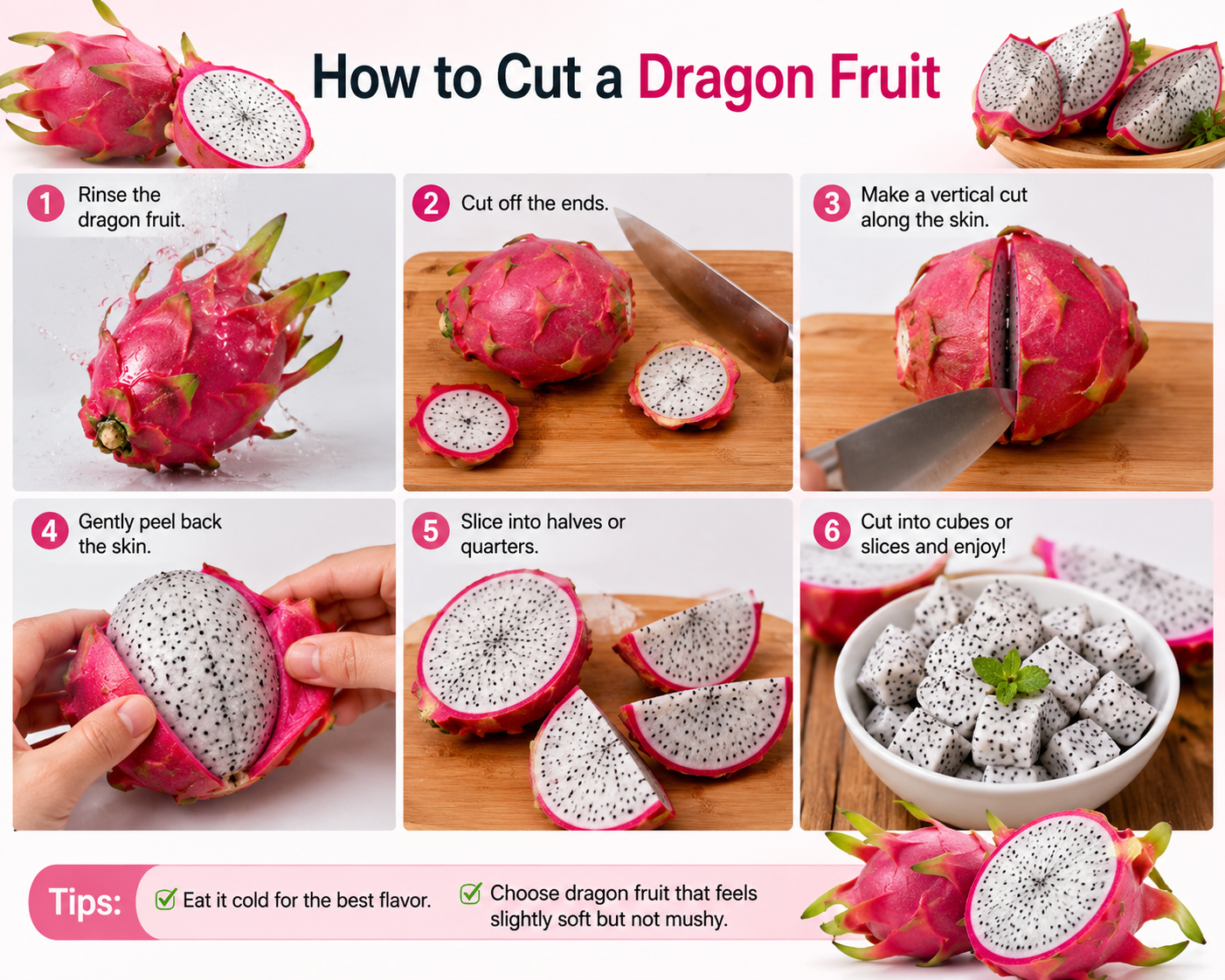
Rinse your dragon fruit under cool running water to remove any dust, dirt, or debris from the exterior. Pat it dry with a clean cloth or paper towel. This ensures that any dirt or bacteria on the exterior doesn’t transfer to the interior flesh when you cut.
The Primary Cutting Methods
Method 1: The Half and Scoop Technique (Simplest Method)
This method is the easiest and most straightforward approach to cutting dragon fruit, making it ideal for first-time users or those seeking the quickest preparation.
Step 1: Halve the Fruit Lengthwise
Place your dragon fruit on the cutting board with the leafy crown facing up. Using your sharp chef’s knife, carefully cut the fruit in half from top to bottom, creating two lengthwise halves. Position the knife at the crown and cut straight down through the center. The fruit should cut relatively easily—the skin is somewhat firm but yields readily to a sharp blade. You should now have two mirror-image halves, each with the flesh exposed.
Step 2: Examine the Interior
Look at the exposed flesh of each half. You’ll see the white or magenta interior studded with small black seeds. The flesh should appear firm and uniformly colored. Any significant browning, mushiness, or unusual discoloration indicates spoilage—though this is rare with properly selected fruit.
Step 3: Scoop Out the Flesh
This is where the spoon becomes invaluable. Take a sturdy spoon and position it between the skin and flesh at one end of the halved fruit. Using gentle pressure, slide the spoon along the interior, separating the flesh from the skin. Work the spoon around the curved interior surface until the flesh releases as a single piece. With practice, you can often remove the entire half of flesh in one continuous piece, though it may separate into a few pieces, which is perfectly fine.
Step 4: Repeat for the Second Half
Repeat the same scooping process with the second half of the fruit. You should now have two large pieces of dragon fruit flesh, potentially broken into several chunks, ready for consumption or further preparation.
Advantages of This Method:
- Fastest and most efficient for immediate consumption
- Requires minimal knife work
- Produces large, attractive flesh pieces suitable for direct eating or serving
- Straightforward and suitable for all skill levels
- Minimal mess or complications
Disadvantages of This Method:
- If you want neatly cubed or julienned pieces, additional cutting is required
- The flesh pieces may break into several parts, which is fine functionally but less elegant for plating
Method 2: The Slice and Separate Technique (Medium Difficulty)
This method produces more controlled pieces and is excellent if you want uniform chunks or need to serve the fruit in an attractive presentation.
Step 1: Create Vertical Slices
Place the whole dragon fruit on your cutting board. Using your sharp knife, make vertical cuts from top to bottom, spacing them approximately ¾ inch to 1 inch apart. These cuts should go completely through the skin and into the flesh, but you should stop before cutting all the way through the fruit—leave about ½ inch of intact fruit at the bottom to hold everything together.
Imagine creating a pattern similar to scoring a roast: you’re cutting partway through the exterior, creating a grid or stripe pattern visible on the outside while keeping the fruit partially intact.
Step 2: Rotate and Repeat
Rotate the fruit 90 degrees and repeat the vertical slicing process, creating a crosshatch or grid pattern on the exterior. Again, maintain the ½ inch of uncut fruit at the bottom as the structural anchor.
Step 3: Separate the Pieces
Once you’ve created the crosshatch pattern, the individual pieces can be separated relatively easily. You can do this by hand, gently pulling the pieces away from the central core, or by running the knife horizontally beneath the cross-hatched pattern to separate the pieces from the base.
Step 4: Serve Directly from the Skin
One advantage of this method is that the individual pieces remain attached to the skin at the bottom, creating a presentation where the fruit can be eaten directly from the skin—similar to how you might eat watermelon or mango. This creates a visually attractive presentation suitable for serving to guests.
Alternatively, Remove the Pieces:
If you prefer disconnected pieces, simply separate all the chunks and transfer them to a serving bowl or plate. The pieces will be relatively uniform in size and attractive in appearance.
Advantages of This Method:
- Creates uniform, attractive pieces
- Allows for direct consumption from the skin
- Visually impressive presentation
- Good option when serving guests
- Produces pieces suitable for fruit salads or other preparations
Disadvantages of This Method:
- Requires more knife work than Method 1
- Takes slightly longer to execute
- Requires careful knife control to avoid cutting through the structural anchor at the bottom
Method 3: The Cube and Dice Technique (Maximum Precision)
This method produces precisely cut cubes or dice, making it ideal for smoothie bowls, fruit salads, or any preparation requiring uniform pieces.
Step 1: Halve the Fruit
Begin by halving your dragon fruit lengthwise using the same technique described in Method 1. This gives you two halves with exposed flesh ready for cutting.
Step 2: Cut Horizontal Lines
On one half, carefully make horizontal cuts across the exposed flesh surface, spacing them approximately ½ inch apart. These cuts should go all the way through the flesh but not through the skin itself—the skin provides structural support.
Step 3: Cut Perpendicular Lines
Rotate the half and make perpendicular cuts, creating a grid pattern of small cubes still attached to the skin. The cubes will remain held in place by the skin, which acts as a platform.
Step 4: Separate the Cubes
Using a spoon or by hand, separate the individual cubes from the skin. They should come away relatively easily. Transfer the cubes to a clean bowl or serving dish.
Step 5: Repeat for the Second Half
Repeat the cutting and separating process for the second half of the fruit.
Advantages of This Method:
- Produces uniform cubes perfect for various preparations
- Professional, polished appearance
- Ideal for smoothie bowls, parfaits, and fruit salads
- Highly controlled and precise
- Demonstrates culinary skill and attention to detail
Disadvantages of This Method:
- Requires the most time and knife skill
- Most labor-intensive approach
- Greater risk of small pieces being lost if handling is careless
Step-by-Step Detailed Cutting Guide
Thorough Preparation Phase
Before making your first cut, ensure everything is ready. Wash the exterior of the fruit under cool running water, rubbing gently with your fingers to remove any surface dirt. Pat dry with a clean cloth. Place the fruit on a stable cutting board at a comfortable working height. Ensure your knife is sharp—if it’s dull, take a moment to sharpen it, as a sharp knife makes cutting dramatically easier and safer.
Making the Initial Cut
For whichever method you choose, the initial cut into the skin is the most critical. Position your knife at the point where you’ll begin (either the top for halving or the side for vertical slicing). Apply moderate, steady pressure as you cut, letting the knife do the work rather than forcing it through. The knife should cut relatively smoothly; if you’re meeting significant resistance, your knife may be dull.
As your knife reaches the thicker skin, maintain consistent pressure and a straight cutting path. Work slowly and deliberately—there’s no advantage to rushing through this process, and hurrying increases the risk of the knife slipping.
Protecting Your Fingers
As you cut deeper into the fruit, position the hand holding the fruit carefully to avoid putting fingers in the knife’s path. Many people naturally curl their non-knife-hand fingers backward—a safe instinct that protects against accidental cuts. This curled finger position is recommended, particularly if you’re still developing your knife skills.
Managing Juice and Mess
Dragon fruit flesh contains moisture, and as you cut, small amounts of liquid may seep from the cut surfaces. This is completely normal and not indicative of any problem. Have paper towels nearby to wipe your knife and hands as needed. The juice doesn’t stain permanently, but it can make your hands and work surface slippery, so wiping as you go prevents this issue.
Post-Cutting Handling and Serving
Immediate Consumption
The simplest and most enjoyable way to consume freshly cut dragon fruit is immediately after preparation. The flavor is fresh, the texture is optimal, and the flesh is at its most vibrant. Simply eat the pieces directly or transfer them to a bowl, optionally adding a squeeze of fresh lime juice or a drizzle of honey to enhance the subtle flavor.
Creating a Dragon Fruit Bowl
A popular presentation involves creating a “dragon fruit bowl” by arranging the cubed or diced flesh in one of the hollowed-out skin halves. This creates an attractive, edible presentation that looks particularly impressive for serving to guests or creating social media-worthy food photography. The skin acts as a natural serving vessel and adds visual drama to the presentation.
Incorporating into Other Dishes
Dragon fruit’s mild, slightly sweet flavor makes it versatile for incorporation into various dishes. The tender flesh and small seeds work well blended into smoothies, layered into yogurt parfaits, added to fruit salads, or used as a topping for desserts and breakfast bowls.
Serving Temperature and Presentation
Dragon fruit is best served chilled or at room temperature. If you’ve refrigerated the cut fruit, you can serve it directly from the refrigerator, or allow it to sit at room temperature for 10-15 minutes before serving if you prefer slightly less cold fruit. The mild flavor is more pronounced at room temperature, while chilled fruit has a refreshing quality particularly appreciated during warm weather.
Storage of Cut Dragon Fruit
Refrigeration Guidelines
Once you’ve cut your dragon fruit, store any unused portions in an airtight container in the refrigerator. Properly stored, cut dragon fruit maintains quality for 3-4 days. The flesh will gradually soften and may develop a slightly watery consistency as it ages, but it remains safe to consume if no off-odors or mold develop.
Why Refrigeration Matters
The exposed flesh of cut dragon fruit contains natural sugars and moisture that make it attractive to bacteria and mold, particularly at room temperature. Refrigeration significantly slows microbial growth, extending the fruit’s shelf life and maintaining food safety.
Freezing for Extended Storage
If you have more dragon fruit than you can consume within 3-4 days, freezing is an excellent option for extending its usable life. Freeze cut dragon fruit in a single layer on a sheet pan for 2-3 hours, then transfer the frozen pieces to freezer bags or airtight containers. Frozen dragon fruit maintains quality for 2-3 months.
Frozen dragon fruit is particularly valuable for smoothies, where the frozen pieces provide thickening and chilling without requiring additional ice. However, thawed frozen dragon fruit becomes soft and watery, making it less suitable for eating fresh or using in preparations where firm texture is important. Plan frozen dragon fruit for blended preparations rather than fresh consumption.
Signs of Spoilage
Discard dragon fruit if it develops:
- Significant mold (small spots can sometimes be trimmed away, but extensive mold indicates spoilage)
- Fermented or unpleasant odor
- Overly soft, mushy texture
- Discoloration or browning of the flesh (minor browning at the edges is sometimes acceptable, but extensive browning indicates spoilage)
Nutritional Benefits and Why Dragon Fruit Deserves a Place in Your Diet
Impressive Nutritional Profile
Dragon fruit packs significant nutritional benefits despite its relatively low calorie content. One cup of fresh dragon fruit chunks (approximately 165 grams) contains roughly 100 calories, making it an excellent choice for health-conscious consumers. The fruit is an exceptional source of vitamin C—a single serving provides approximately 25% of the daily recommended value. Vitamin C supports immune function, collagen synthesis, and acts as a powerful antioxidant.
Dragon fruit is also rich in dietary fiber, with about 2.4 grams per cup, supporting digestive health and promoting healthy gut bacteria. This fiber content, combined with the fruit’s hydrating properties and modest calorie count, makes it excellent for weight management and digestive wellness.
Antioxidant Properties
The vivid pink, red, or magenta coloring in dragon fruit comes from powerful antioxidant compounds called betalains. These plant pigments have been shown in various studies to have anti-inflammatory properties and may help protect cells from oxidative damage. The magenta-fleshed variety contains particularly high concentrations of these beneficial compounds.
Prebiotic Fiber and Gut Health
Beyond simple dietary fiber, dragon fruit contains oligosaccharides—specific types of carbohydrates that act as prebiotics, feeding beneficial bacteria in your gut microbiome. A healthy gut microbiome is increasingly recognized as essential for overall health, affecting everything from immune function to mood regulation.
Low Glycemic Index
Despite its natural sweetness, dragon fruit has a relatively low glycemic index, meaning it doesn’t cause rapid spikes in blood sugar levels. This makes it a suitable fruit choice for people managing diabetes or those attempting to maintain stable energy levels throughout the day.
Hydration and Electrolytes
Dragon fruit is approximately 85% water, making it an excellent choice for staying hydrated. Additionally, it contains small amounts of electrolytes like potassium and magnesium, supporting proper hydration and muscle function.
Creative Uses and Recipe Ideas
Dragon Fruit Smoothie Bowls
One of the most visually striking and nutritionally complete uses for dragon fruit is in smoothie bowls. Blend fresh or frozen dragon fruit with yogurt, plant-based milk, and additional fruits like berries or mango to create a thick smoothie base. Pour into a bowl and top with granola, coconut flakes, fresh berries, nuts, and seeds. The dramatic pink or magenta color creates an Instagram-worthy presentation while providing substantial nutrition.
Smoothies and Beverages
Dragon fruit blends beautifully into any smoothie, providing natural sweetness, vibrant color, and nutritional benefits. Combine with tropical fruits like pineapple and coconut, or pair with berries for a different flavor profile. Dragon fruit even works well in sophisticated cocktails and mocktails, where its color and mild flavor complement citrus, coconut, or floral notes.
Fruit Salads and Breakfast Preparations
Dragon fruit’s mild flavor makes it an excellent addition to fruit salads, where it contributes visual drama and nutritional value without overpowering other flavors. It pairs particularly well with other tropical fruits like mango, pineapple, and coconut, as well as citrus fruits. Toss with lime juice and fresh mint for a refreshing salad.
Desserts and Sweet Preparations
Beyond smoothie bowls, dragon fruit works well in various desserts. It can top cheesecakes, layer into yogurt parfaits, flavor ice cream, or be used in fruit tarts. For baking applications, remember that high heat can diminish the vibrant color, so dragon fruit is best used in no-bake desserts or as a finishing element rather than baked into cakes or cookies.
Savory Applications
While less common, dragon fruit can work in certain savory preparations. Its mild, slightly sweet flavor and tender texture suit fruit-forward salads with savory elements like goat cheese, nuts, and vinaigrette dressings. Some creative chefs have incorporated dragon fruit into salsa-style preparations or as a garnish for dishes where its visual appeal adds value beyond flavor.
Frequently Asked Questions
Selection and Storage
Q: How do I know if a dragon fruit is ripe?
A: Look for vibrant coloring (bright pink, red, or yellow depending on variety), and gently squeeze to ensure it yields slightly to pressure—similar to a ripe avocado. Avoid fruits with dull coloring or brown spots. The leafy crown should be fresh and green, not brown or wilted.
Q: How long can I keep a dragon fruit before cutting it?
A: At room temperature, a ripe dragon fruit stays fresh for 2-3 days. In the refrigerator, it maintains quality for 2-3 weeks. Store in the crisper drawer or on a shelf where it won’t be compressed by heavier items.
Q: What if I accidentally buy an unripe dragon fruit?
A: Dragon fruit ripens on the plant and doesn’t mature significantly after picking. An unripe fruit will remain largely unripe. However, you can place it at room temperature away from direct sunlight for several days—it may soften slightly and develop marginally sweeter flavor, though it won’t undergo dramatic ripening. This is one reason selecting carefully at the market is important.
Q: Can I freeze cut dragon fruit?
A: Yes, absolutely. Freeze cut pieces in a single layer on a sheet pan, then transfer to freezer bags. Frozen dragon fruit lasts 2-3 months and is particularly valuable for smoothies. However, thawed fruit becomes soft and watery, making it less suitable for fresh consumption.
Cutting and Preparation
Q: Is cutting dragon fruit difficult?
A: No, it’s remarkably simple. The skin is firm but yields readily to a sharp knife, and the fruit doesn’t require specialized equipment or techniques. Most people can successfully cut their first dragon fruit without difficulty.
Q: What’s the easiest cutting method?
A: The half-and-scoop method is easiest and fastest. Simply halve the fruit lengthwise and scoop out the flesh with a spoon. This takes 2-3 minutes and requires minimal knife skill.
Q: Do I need special equipment?
A: No special equipment is required beyond a sharp chef’s knife, cutting board, and optionally a sturdy spoon. Standard kitchen tools are completely sufficient.
Q: Should I peel the skin?
A: The skin is inedible and should not be consumed. It’s firm and unpalatable. Always remove the skin as part of the cutting process—the edible portion is only the inner flesh.
Q: Are the black seeds inside edible?
A: Yes, the small black seeds are completely edible and actually contain nutritional value. They have a mild flavor and don’t require removal. Many people consume them along with the flesh.
Q: How much flesh is wasted when cutting dragon fruit?
A: Minimal waste occurs when cutting dragon fruit. The primary non-edible portion is the skin, which is typically removed entirely. Unlike some fruits that may require peeling away significant skin or removing large pits, dragon fruit is quite efficient in terms of edible-to-inedible ratio.
Flavor and Culinary Use
Q: What does dragon fruit taste like?
A: Dragon fruit has a mild, delicate, slightly sweet flavor—somewhat similar to kiwi but less tart. The magenta-fleshed variety tends to be sweeter than the white-fleshed variety. The flavor is subtle, making it versatile for use in various preparations.
Q: Why is my dragon fruit bland?
A: Underripe or low-quality dragon fruits can be disappointingly bland. Proper selection—choosing fruit with vibrant coloring and appropriate firmness—is crucial. Additionally, some people find the naturally subtle flavor insufficient without the addition of lime juice, honey, or other complementary flavors.
Q: Can I cook dragon fruit?
A: You can incorporate dragon fruit into some cooked preparations, but high heat can diminish the vibrant color and delicate texture. It’s best used raw or added to dishes at the very end of cooking. It works better in no-bake desserts than in baking applications.
Q: What foods pair well with dragon fruit?
A: Dragon fruit pairs well with tropical fruits (mango, pineapple, coconut), citrus flavors (lime, lemon), berries, yogurt, coconut products, nuts, granola, and honey. Its mild flavor doesn’t overpower other ingredients, making it versatile.
Nutritional Questions
Q: Is dragon fruit healthy?
A: Yes, dragon fruit is nutritious. It’s low in calories, high in vitamin C and fiber, contains antioxidants, and has a low glycemic index. It’s an excellent addition to a balanced diet.
Q: Can people with diabetes eat dragon fruit?
A: Yes, dragon fruit’s low glycemic index and modest natural sugar content make it suitable for most people managing diabetes. However, individual responses vary, so people with diabetes should monitor their personal response.
Q: How much dragon fruit should I eat?
A: A typical serving is one cup of fresh fruit chunks (approximately 100 calories), providing substantial nutritional benefits. There’s no strict limit, though like any food, moderation and variety are important principles.
Q: Does dragon fruit have any downsides?
A: Dragon fruit is generally very safe and well-tolerated. Some people may experience minor digestive effects from the high fiber content if consuming very large quantities, but this is rare. Allergies to dragon fruit are extremely uncommon.
Conclusion
Learning to cut and prepare dragon fruit represents a simple yet rewarding expansion of your culinary skills and nutritional horizons. Despite its exotic appearance and dramatic name, this tropical fruit is remarkably straightforward to select, cut, and enjoy. Armed with the knowledge provided in this comprehensive guide, you can confidently approach dragon fruit at the market, select perfectly ripe specimens, and prepare them using whichever technique suits your needs and skill level.
The half-and-scoop method provides the quickest preparation for immediate consumption; the slice-and-separate technique offers an attractive presentation suitable for serving to guests; and the cube-and-dice method provides precisely cut pieces perfect for various culinary applications. Regardless of which method you choose, the entire process takes only a few minutes and requires nothing more than a sharp knife, cutting board, and optionally a sturdy spoon.
Beyond the practical aspects of cutting and preparation, dragon fruit offers impressive nutritional benefits. The fruit’s low calorie content, high vitamin C and fiber levels, antioxidant properties, and prebiotic fiber make it a genuine nutritional asset. The vibrant pink, red, and magenta flesh contains powerful compounds that support overall health and wellness. Combined with the fruit’s versatility in both sweet and savory applications, dragon fruit deserves a regular place in the diet of anyone interested in health, nutrition, and culinary exploration.
Whether you’re creating visually stunning smoothie bowls, adding dragon fruit to fruit salads, incorporating it into desserts, or simply enjoying fresh chunks as a refreshing snack, this exotic fruit brings both nutritional value and culinary excitement to your kitchen. The dramatic appearance that might have initially seemed intimidating becomes an asset—creating beautiful presentations and Instagram-worthy food photography while providing genuine nutritional and flavor benefits.
So the next time you encounter this striking pink or yellow fruit with its distinctive leafy crown in the produce section, don’t hesitate. Select a ripe specimen, bring it home, and confidently cut and prepare it using the techniques outlined in this guide. Within minutes, you’ll be enjoying one of nature’s most visually impressive and nutritionally impressive fruits. Your exploration of dragon fruit is an investment in both culinary skills and nutritional wellness that will pay dividends for years to come.